Program Overview
Buried pipelines, storage tanks and marine structures are protected from corrosion by cathodic protection systems that work silently for decades, but only if they are tested. Periodic field measurements are what reveal a failed anode bed, a shorted casing or a rectifier that has stopped delivering current before corrosion becomes a leak.
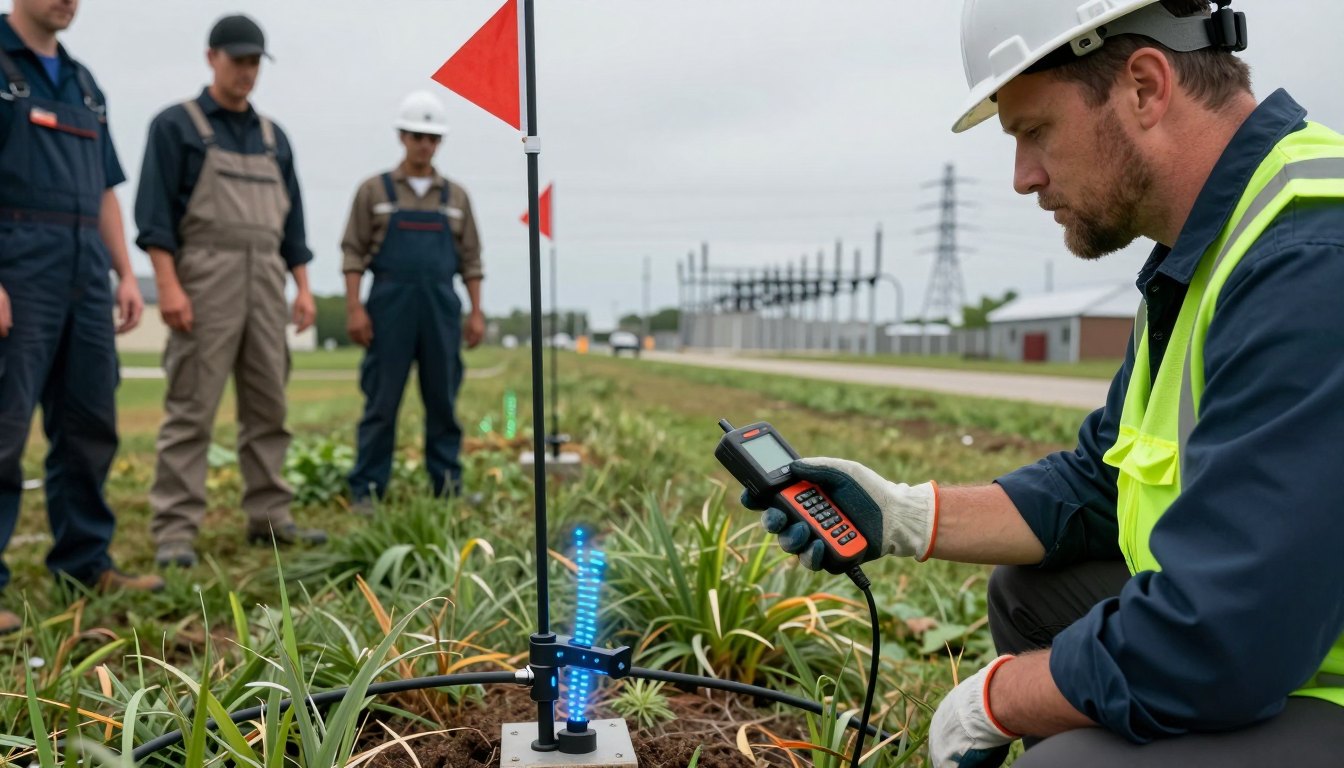
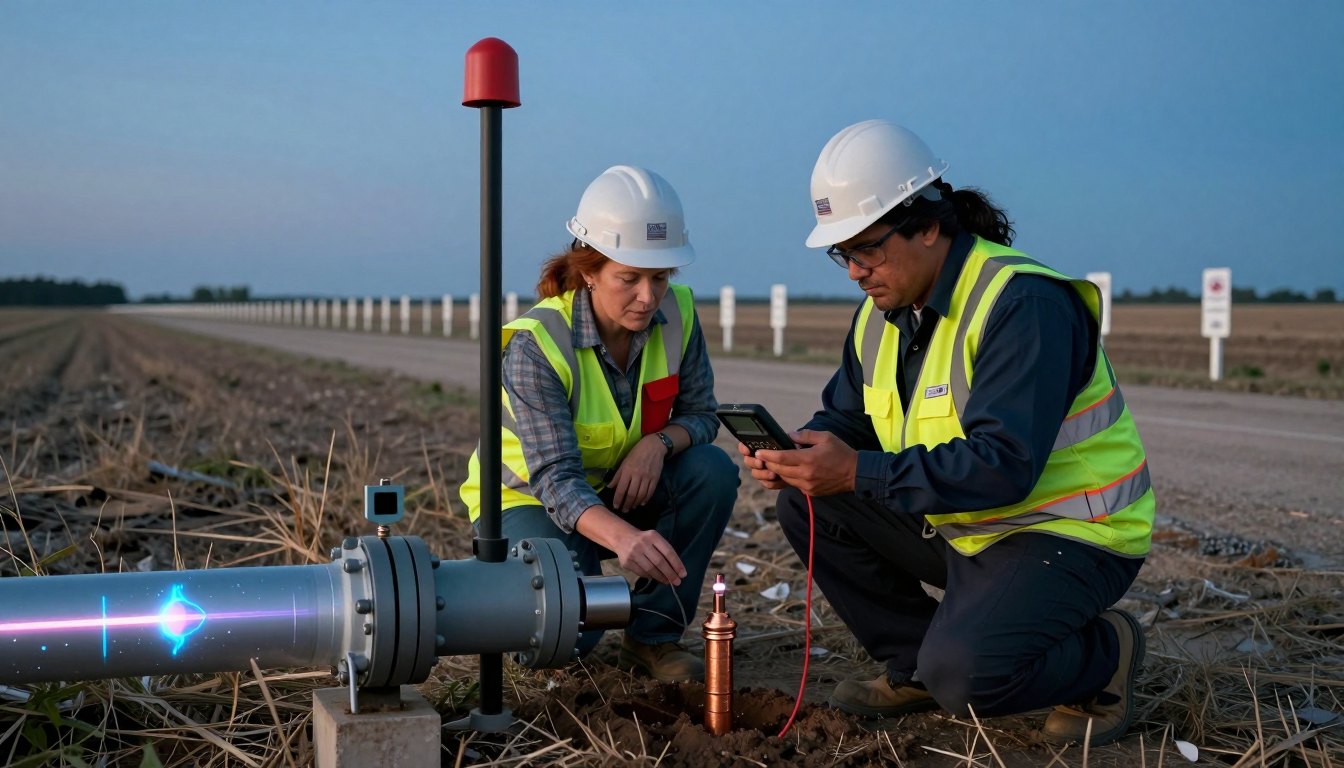
This Level 1 program prepares technicians to collect those measurements accurately and safely. It starts with the electrical and electrochemical basics of corrosion and CP, then covers system components, test instruments and reference electrodes. Participants practice potential surveys, rectifier and shunt readings, continuity and short testing, soil resistivity measurement and pipe and cable locating, and learn to map, record and report their findings.
Learning Outcomes
- Explain basic electricity, electrochemistry and corrosion theory as they apply to cathodic protection
- Relate current flow and polarity to anodic and cathodic activity on a protected structure
- Identify the components of galvanic and impressed current CP systems, including anodes, rectifiers and test stations
- Measure structure-to-electrolyte potentials with reference electrodes and record survey data
- Read rectifier outputs and shunts and perform continuity, isolation and short tests
- Measure soil resistivity and locate pipes and cables to support CP surveys
Program Modules
- Fundamentals of Electricity, Electrochemistry and Corrosion — electrical laws, corrosion cells and CP theory
- Polarity, Current Flow and Corrosion Activity — anodic and cathodic areas and the effect of CP current
- CP System Components — impressed current systems, galvanic anodes, rectifiers, bonds and test stations
- Test Instruments and Reference Electrodes — voltmeters, copper/copper sulfate and silver/silver chloride reference cells
- Field Tests — structure-to-electrolyte potentials and a range of routine field measurements
- Rectifier and Shunt Readings — reading shunts in rectifiers, bonds and anode circuits
- Continuity and Short Testing — detecting shorts, casing contacts and verifying isolation
- Resistivity and Locating — soil resistivity measurement and pipe and cable locating
- Periodic Surveys — confirming CP effectiveness against accepted criteria
- Mapping, Reporting and Record Keeping — location mapping, data recording and report preparation
- Safety and Code Requirements — electrical and site safety and code requirements specific to CP work
Who Should Attend
- Field technicians entering corrosion control work
- Pipeline and utility maintenance personnel
- Tank farm and terminal technicians
- Electrical technicians supporting CP rectifier maintenance
- Inspection staff who review CP survey data
Standards & Codes Referenced
- NACE SP0169 (Control of External Corrosion on Underground or Submerged Metallic Piping Systems)
- NACE SP0176 (Corrosion Control of Submerged Areas of Permanently Installed Steel Offshore Structures)
- NACE SP0177 (Mitigation of AC and Lightning Effects on Metallic Structures and Corrosion Control Systems)
- NACE SP0200 (Steel-Cased Pipeline Practices)
- ISO 12473 (General Principles of Cathodic Protection in Seawater)
- BS EN 12954 (Cathodic Protection of Buried or Immersed Metallic Structures)
- BS EN 13509 (Cathodic Protection Measurement Techniques)
Assessment & Certification
Assessment includes a written examination on corrosion and CP fundamentals and a practical field test in which candidates take potential, rectifier, shunt and resistivity readings on a training CP system and record them accurately. Practical sessions take place at ASEEE-approved training centers.
Successful candidates are awarded the ASEEE competency certificate, issued with a unique certificate ID that employers and clients can verify online through Certificate Check. ASEEE recommends recertification every 3 years to keep competence aligned with current standards, equipment and site practice.