
Program Overview
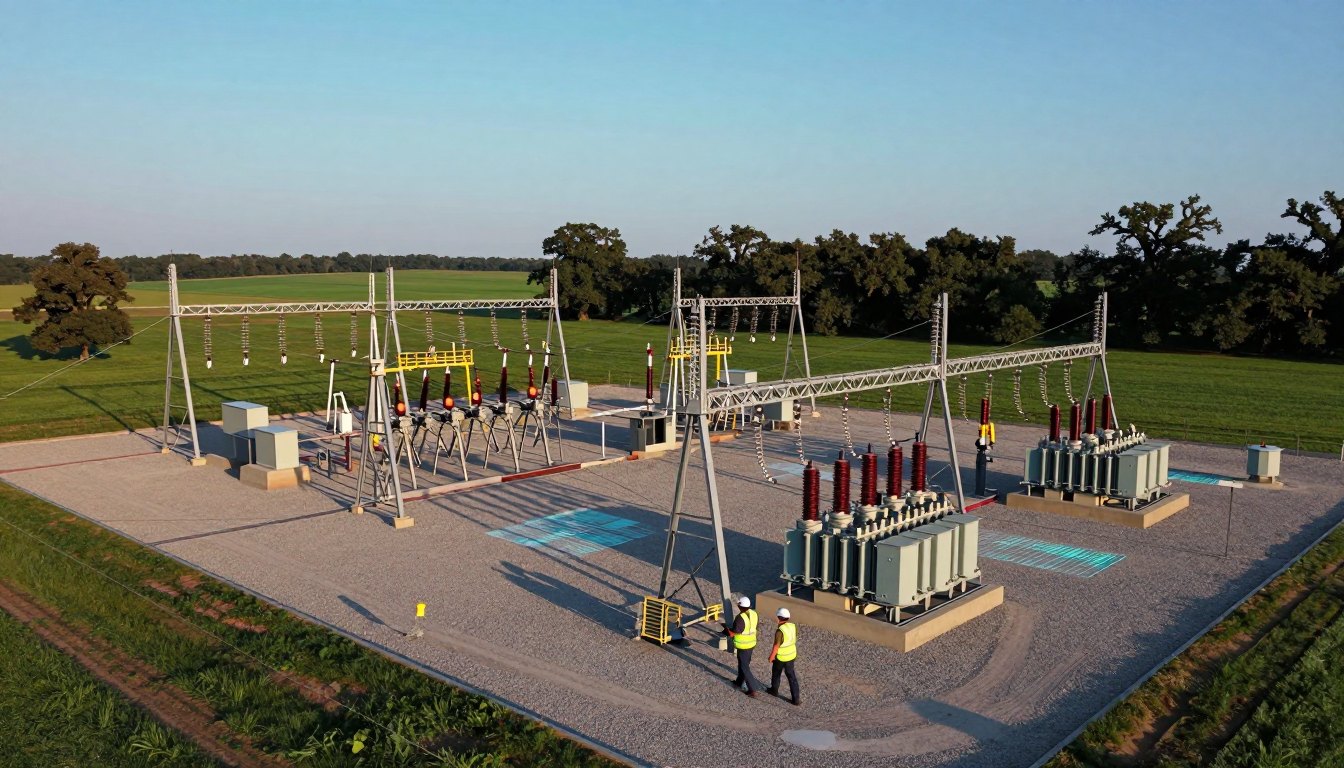
Power system studies decide whether a network is safe, stable and economical before equipment is purchased or settings are changed. ETAP is one of the most widely used platforms for these studies, but software skill alone is not enough. Credible results depend on sound data, correct modeling assumptions and an engineer who can recognize when an answer is physically wrong.
This program combines ETAP workflow training with the engineering behind each study. Participants build a complete one-line model of an industrial facility with utility supply, generation, transformers, cables and motor loads, and then run the core studies in sequence. Each module ties results to IEEE and IEC methods, including IEC 60909 short-circuit calculation and IEEE 1584 incident energy, and covers how to report findings in a form that decision-makers and reviewers can trust.
Learning Outcomes
- Construct and validate an ETAP one-line model from equipment data and system drawings
- Perform load flow studies and evaluate voltage profiles, loading and losses
- Calculate short-circuit currents using ANSI/IEEE and IEC 60909 methods and verify equipment duty
- Analyze motor acceleration and voltage dip during starting
- Coordinate protective devices using time-current curves and recommend relay settings
- Perform arc flash studies to IEEE 1584 and produce incident energy results
- Assess harmonic distortion and transient stability and recommend mitigation
Program Modules
- ETAP Environment and System Modeling — project setup, libraries, one-line construction, data validation and study cases
- Load Flow Analysis — Newton-Raphson and related methods, voltage profiles, transformer taps and reactive power
- Short Circuit Analysis — ANSI/IEEE and IEC 60909 calculations, device duty evaluation and fault contributions
- Motor Acceleration Studies — static and dynamic motor starting, voltage dip limits and starting methods
- Relay Coordination Studies — ETAP Star time-current curves, selectivity margins and protective device setting
- Arc Flash Studies — IEEE 1584 incident energy, arc flash boundaries and labeling outputs
- Harmonic Analysis — harmonic sources, frequency scans, distortion limits and filter design basics
- Transient Stability Studies — rotor-angle stability, critical clearing time and load shedding scenarios
Who Should Attend
- Power system and electrical design engineers
- Protection and commissioning engineers
- Utility planning engineers
- Electrical consultants performing arc flash and coordination studies
- Graduate engineers moving into power system analysis
Standards & Codes Referenced
- IEEE 399
- IEEE 242
- IEEE 141
- IEEE 1015
- IEEE 1584
- IEEE 519
- IEC 60909
Assessment & Certification
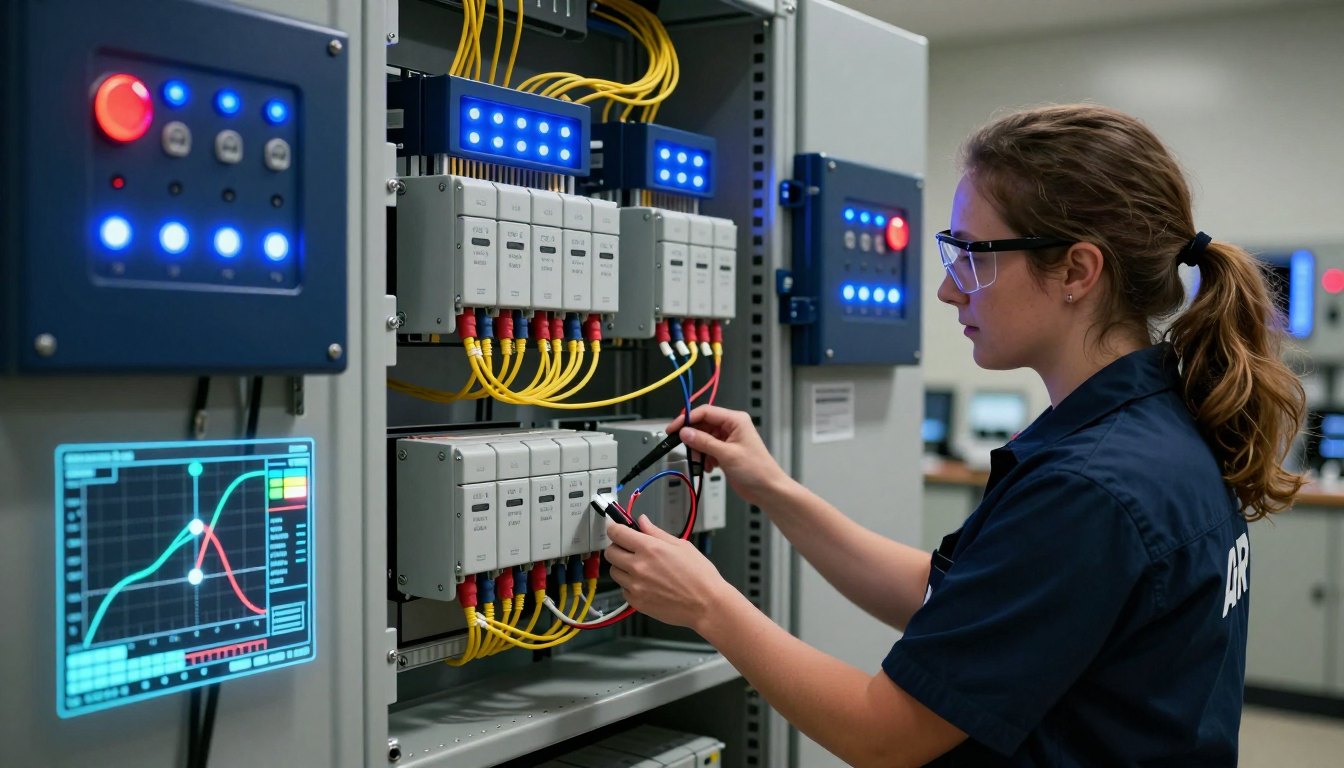
Assessment combines a written examination on power system analysis methods, modeling assumptions and interpretation of study results with a practical assessment in which each participant completes a set of ETAP studies on a case-study network and presents the findings and recommendations in a technical report. Practical sessions take place at ASEEE-approved training centers, using calibrated equipment and realistic work scenarios under the supervision of a qualified assessor.
Participants who meet the competency criteria receive an ASEEE competency certificate carrying a unique certificate ID that employers and clients can verify online through Certificate Check. ASEEE recommends recertification every 3 years to keep skills aligned with current practice and revised standards.