Program Overview
Fiber optics carry the data behind control systems, substations, data centers and telecom networks. A fiber link is only as good as its weakest connector or splice, and a single dirty end face can take a critical circuit down. Technicians who can install, terminate and prove fiber networks are essential across every sector that depends on reliable communication.
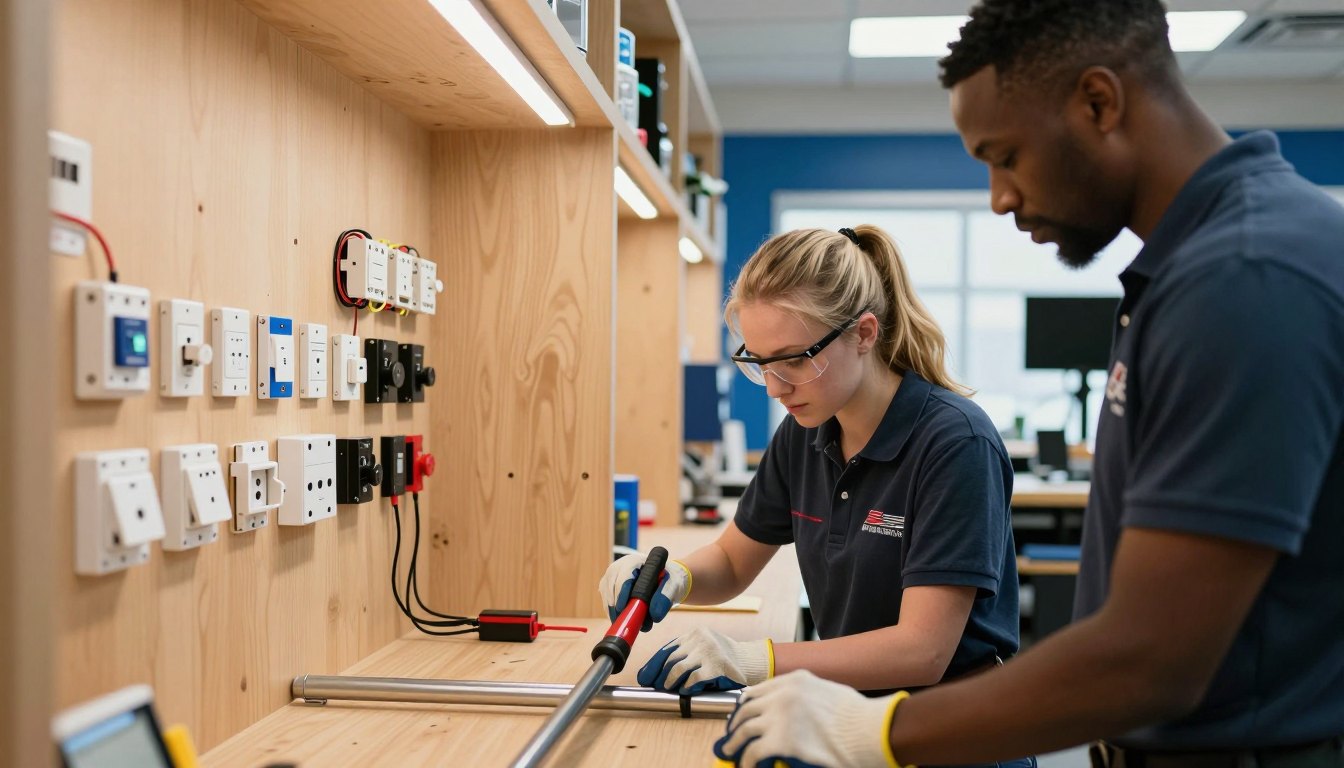
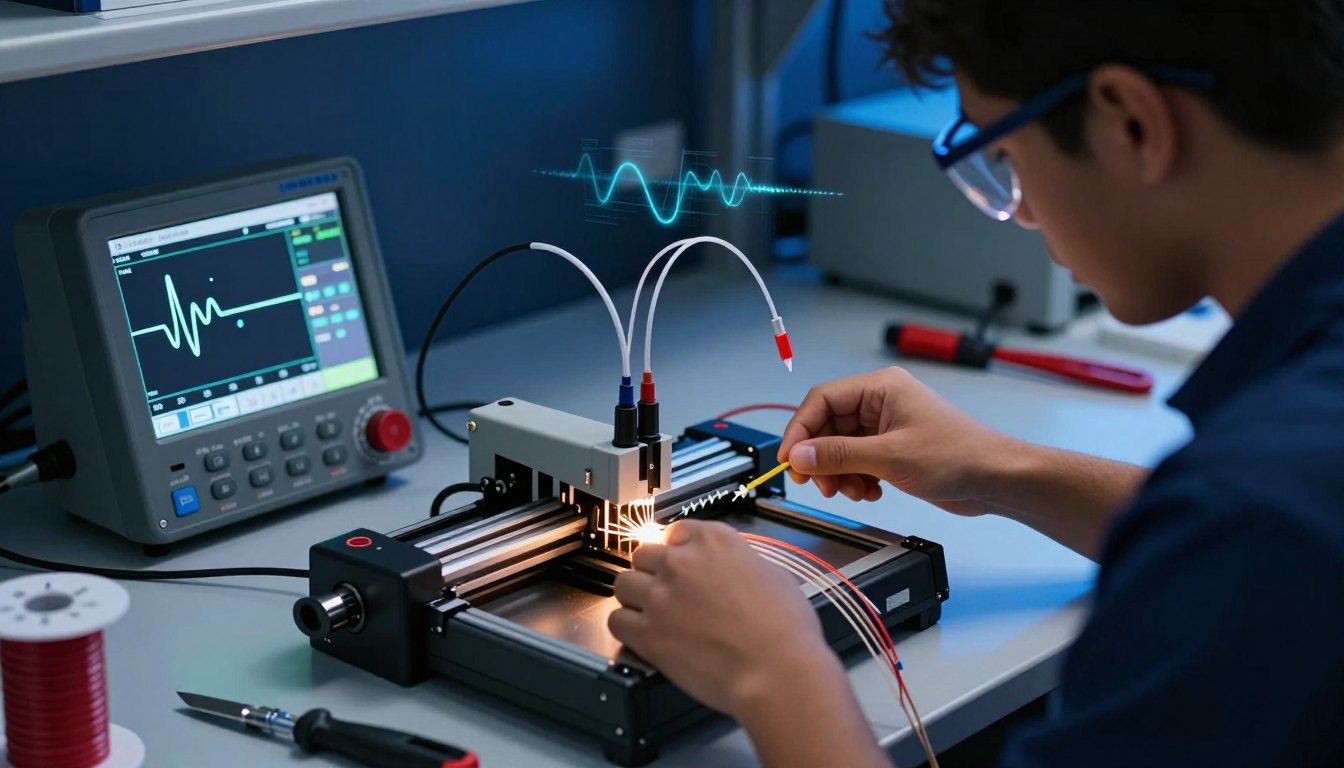
This program combines optical theory with intensive hands-on practice. Participants learn how light propagates in multimode and singlemode fibers, what limits bandwidth and distance, and how to select cables and connectors for the environment. Practical work covers cable preparation, fusion and mechanical splicing, connector termination, insertion loss testing and OTDR characterization, culminating in loss budget calculations and documented test results.
Learning Outcomes
- Explain refraction, numerical aperture, mode field diameter and cutoff wavelength in multimode and singlemode fiber
- Compare OM1–OM4 and G.652–G.657 fiber types and select fiber, cable and connectors for a given application
- Describe attenuation, scattering, absorption, modal, chromatic and polarization mode dispersion and their effect on link performance
- Prepare cable and perform fusion and mechanical splices and connector terminations to acceptable loss values
- Calculate link loss budgets and admissible fiber lengths and verify them by insertion loss testing
- Characterize links with an OTDR at multiple wavelengths, interpret events including gainers, and troubleshoot faults
Program Modules
- Introduction to Fiber Optics and Optical Networks — applications, network architectures and safety with lasers and fiber shards
- Light Propagation and Fiber Types — refraction and reflection, OM1–OM4 multimode and G.652 to G.657 singlemode fiber
- Fiber Parameters and Optoelectronics — cutoff wavelength, numerical aperture, mode field diameter, transmitters and transceivers
- Transmission Bands and Multiplexing — optical windows, CWDM, DWDM and time division multiplexing
- Loss and Dispersion — attenuation, scattering, absorption, modal, chromatic and polarization mode dispersion
- Components and Cable Construction — mode conditioning, amplifiers, attenuators, loose tube and tight buffer designs
- Choosing Cable and Connectors — cable specifications, NEC fire ratings and color coding
- Splicing and Termination — fusion and mechanical splicing, connector termination and cable and fiber preparation
- OTDR Link Characterization — testing at multiple wavelengths, event analysis and loss and power budget calculations
- Troubleshooting and Certification Testing — admissible lengths, mandrel wrapping, gainers and test documentation
Who Should Attend
- Telecom and network installation technicians
- Instrumentation and control technicians maintaining fiber networks
- Data center and structured cabling installers
- Utility SCADA and substation communication staff
- Network engineers who specify and accept fiber installations
Standards & Codes Referenced
- NECA/FOA 301 (Standard for Installing and Testing Fiber Optics)
- ISO/IEC 11801 (Generic Cabling for Customer Premises)
- ISO/IEC 14763-3 (Testing of Optical Fibre Cabling)
- ANSI/TIA-568.3-D (Optical Fiber Cabling and Components Standard)
- ITU-T G.652 and G.657 (Single-Mode Optical Fiber Characteristics)
Assessment & Certification
Assessment includes a written examination on fiber theory, standards and loss budgets and a practical test in which candidates terminate connectors, complete fusion splices, and produce insertion loss and OTDR results that meet specified acceptance values. Practical sessions take place at ASEEE-approved training centers.
Successful candidates are awarded the ASEEE competency certificate, issued with a unique certificate ID that employers and clients can verify online through Certificate Check. ASEEE recommends recertification every 3 years to keep competence aligned with current standards, equipment and site practice.