Program Overview
Electrical quality is built in, not inspected in. Yet inspection remains the evidence that an installation meets its design and its code. This program equips QA/QC inspectors and engineers to do both: establish a quality framework for electrical work and verify, through structured inspection and testing, that the result conforms.
Participants connect ISO 9001 quality principles to everyday electrical project practice: inspection and test plans, hold and witness points, nonconformance reports and calibration control of test instruments. Technical sessions cover the requirements of IEC 60364 for low-voltage installations, standard voltages under IEC 60038 and the safe-work obligations of NFPA 70E during testing. The program closes with documentation, turnover packages and code compliance audits. Case studies drawn from typical industrial and commercial projects show how weak QA/QC practice leads to rework, failed energization and safety incidents, and how a well-run inspection regime prevents them. Participants leave with templates they can adapt to their own projects.
Learning Outcomes
- Apply ISO 9001 quality assurance principles to electrical construction and maintenance
- Develop inspection and test plans with hold, witness and review points
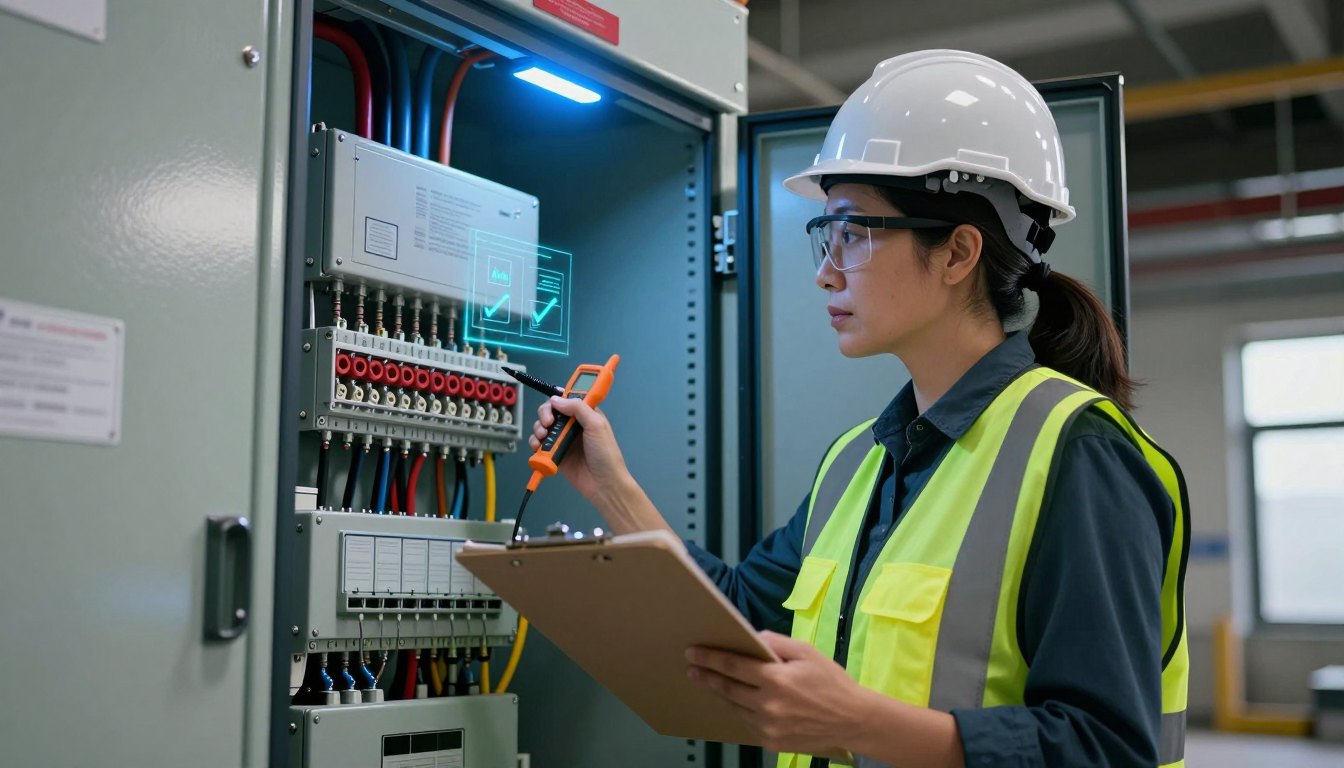
- Inspect cable installations, terminations, earthing and distribution equipment against IEC 60364
- Specify and witness insulation resistance, continuity, loop impedance and RCD tests
- Raise and close nonconformance reports with traceable corrective actions
- Compile complete, auditable quality records and turnover documentation
Program Modules
- Electrical Systems Overview — generation to utilization, system earthing types and standard voltages
- Quality Assurance Principles — ISO 9001 process approach, quality plans and roles and responsibilities
- Quality Control Practices — inspection and test plans, checklists, sampling and hold points
- Electrical Codes and Standards — structure and use of IEC 60364, IEC 60038, IEC 61010 and NFPA 70E
- Electrical Testing and Inspection — visual inspection, insulation, continuity, loop and protective device testing
- Documentation and Record-Keeping — test certificates, NCRs, calibration records and turnover packages
- Compliance with Electrical Codes — audits, verification of conformity and handling deviations
Who Should Attend
- Electrical QA/QC inspectors and engineers
- Site and project electrical engineers
- Construction supervisors and foremen
- Third-party inspection staff
- Quality managers on EPC projects
Standards & Codes Referenced
- ISO 9001 (Quality management systems)
- IEC 60364 (Low-voltage electrical installations)
- IEC 60038 (IEC standard voltages)
- IEC 61508 (Functional safety of E/E/PE safety-related systems)
- IEC 61010 (Safety of electrical equipment for measurement, control and laboratory use)
- NFPA 70E (Standard for Electrical Safety in the Workplace)
Assessment & Certification
Competence is confirmed through a written examination on quality principles, code requirements and test acceptance criteria and a practical assessment in which participants inspect a training installation, witness tests and complete an inspection report with NCRs. Practical sessions take place at ASEEE-approved training centers under the supervision of a qualified assessor. Reports are judged on technical accuracy, traceability and the clarity of corrective actions.
Successful candidates receive the ASEEE competency certificate, which carries a unique ID that employers and clients can verify online through Certificate Check. Recertification is recommended every 3 years.