Program Overview
At high voltage, the margin for error in a joint is measured in millimeters. Electrical stress concentrates wherever the cable screen ends, and only correct stress control, clean interfaces and accurate dimensions keep that stress within what the insulation can withstand for decades. This five-day program develops jointers who can install HV accessories that pass acceptance testing and stay in service.
Participants study HV cable construction and the design of heat-shrink joints and terminations, then move into extended workshop practice. They prepare cables, install straight joints, and terminate cables for switchgear and transformer connections, including indoor and outdoor terminations. The course links each workmanship step to the test requirements of IEC 60502-4 and IEEE 48 and IEEE 404, so installers understand why every dimension matters.
Learning Outcomes
- Identify HV cable constructions, screens and insulation types and the accessories suited to each
- Explain electrical stress control at the screen cut and how heat-shrink stress-control tubing manages it
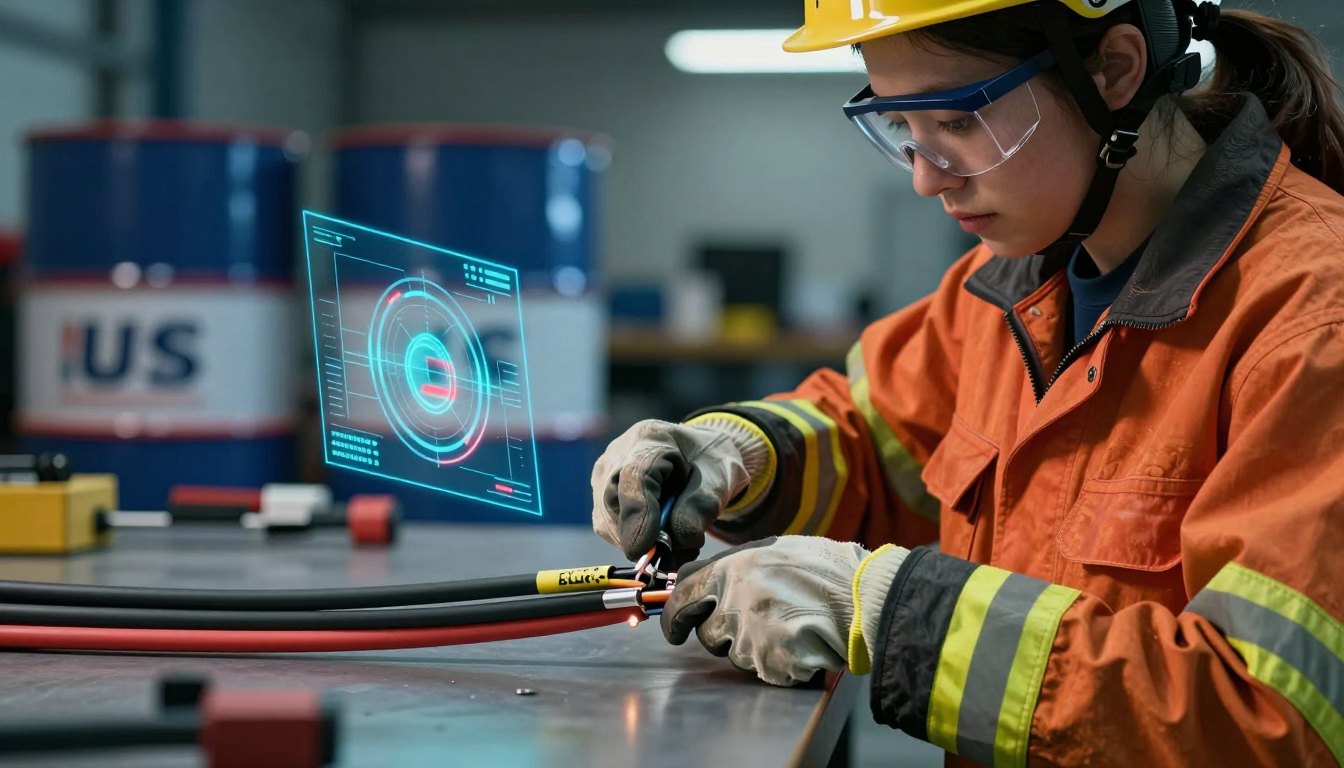
- Perform cable preparation for HV jointing and termination to specified dimensions and surface finish
- Install HV straight joints using Raychem heat-shrink systems
- Install HV terminations for switchgear and transformer connections
- Apply IEC and IEEE requirements and safe work practices for HV cable installation
Program Modules
- HV Cables, Accessories and Tools — cable components, Raychem heat-shrink joint and termination kits, and specialist preparation tools
- Cable Insulation, Screens and Construction Types — XLPE and EPR insulation, bonded and strippable semicon, wire and tape screens, and armor
- Electrical Stress Control — field distribution at the screen end and the role of stress-control and insulating tubes
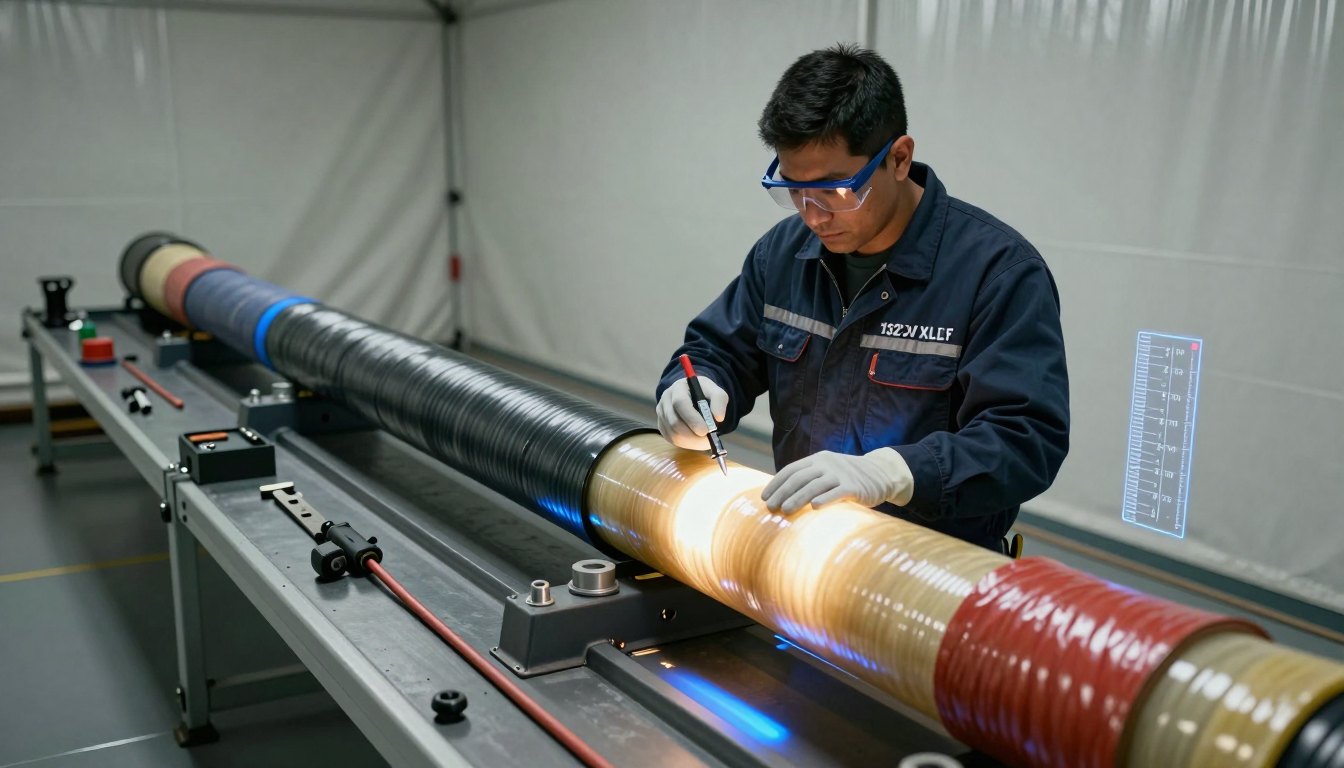
- Cable Preparation for HV Jointing and Termination — measured cutback, semicon removal, insulation finishing and contamination control
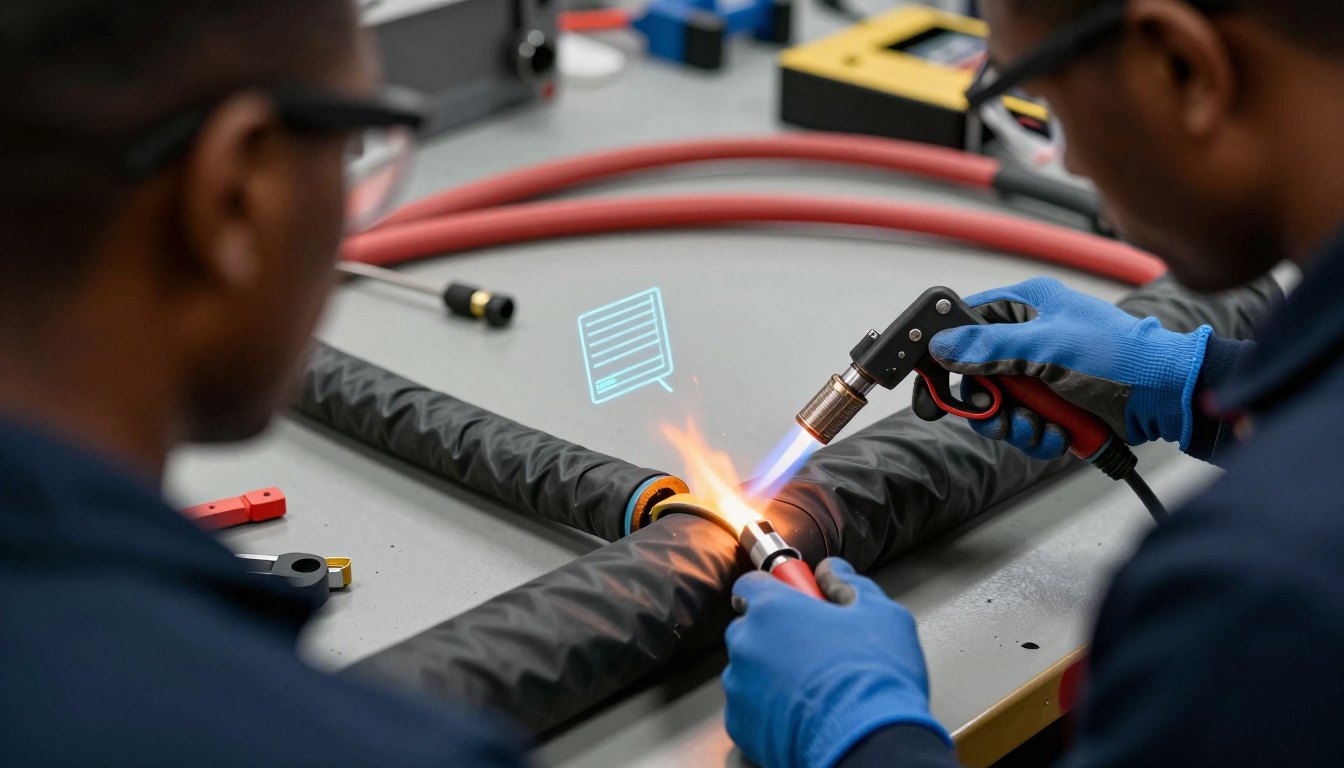
- HV Straight Joints — installing heat-shrink straight joints, including connector crimping and screen reinstatement
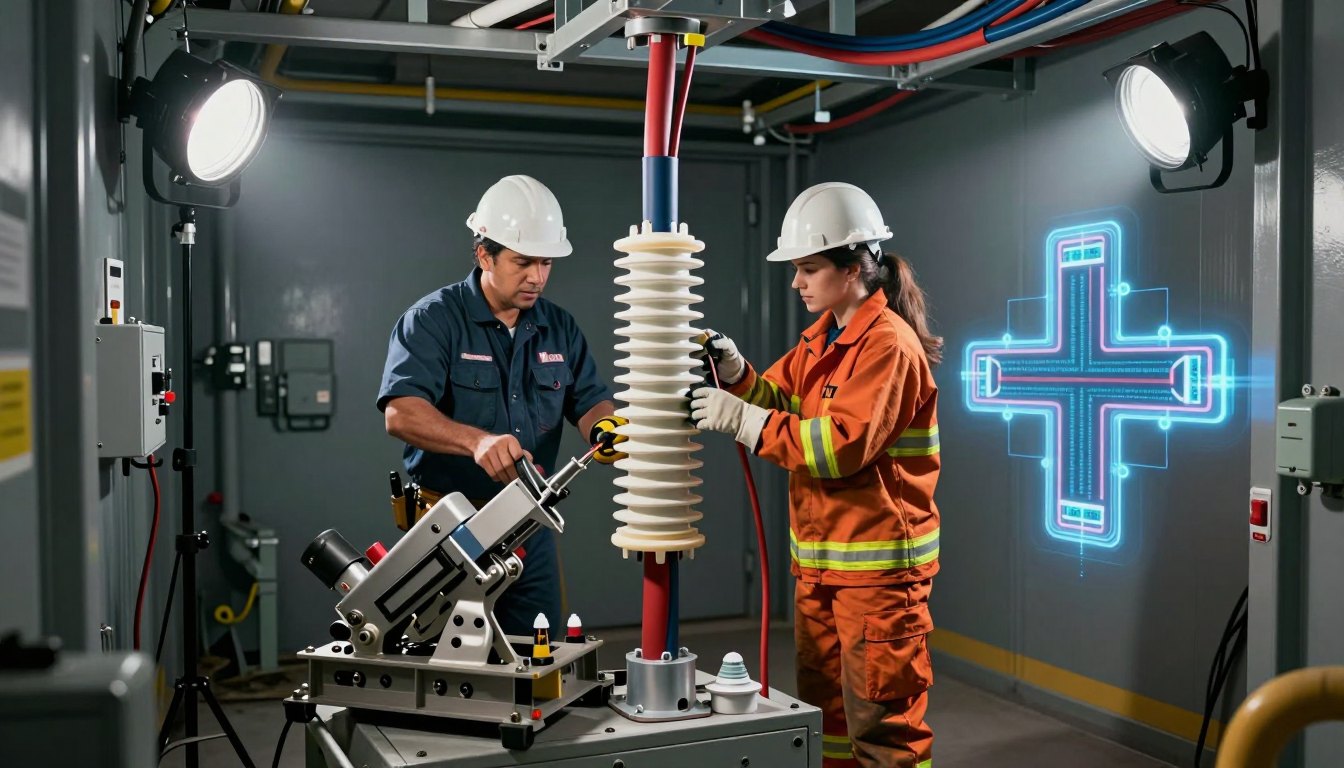
- HV Terminations for Switchgear and Transformers — indoor and outdoor terminations, sheds, lugs and cable box connections
- Safety Rules and Standards — IEC and IEEE requirements, isolation, earthing and permit controls for HV cable work
- Quality Checks and Handover — workmanship inspection, documentation and the link to post-installation testing
Who Should Attend
- Experienced LV jointers progressing to HV
- HV cable jointers seeking formal competency certification
- Utility network technicians
- Commissioning and maintenance supervisors in industrial plants
- Cable installation contractors
Standards & Codes Referenced
- IEC 60502-4
- IEEE 404
- IEEE 48
- OSHA 29 CFR 1910.269
Assessment & Certification
Assessment combines a written examination on HV cable construction, stress control and accessory standards with a practical assessment in which each participant installs an HV straight joint and a termination on cable samples, each inspected against critical dimensional and workmanship checkpoints. Practical sessions take place at ASEEE-approved training centers, using calibrated equipment and realistic work scenarios under the supervision of a qualified assessor.
Participants who meet the competency criteria receive an ASEEE competency certificate carrying a unique certificate ID that employers and clients can verify online through Certificate Check. ASEEE recommends recertification every 3 years to keep skills aligned with current practice and revised standards.