Program Overview
Every experienced electrician started with the same fundamentals: working safely, handling tools correctly, understanding basic circuits and installing wiring neatly and to code. Shortcuts learned at this stage tend to last a career, which is why a structured foundation matters.
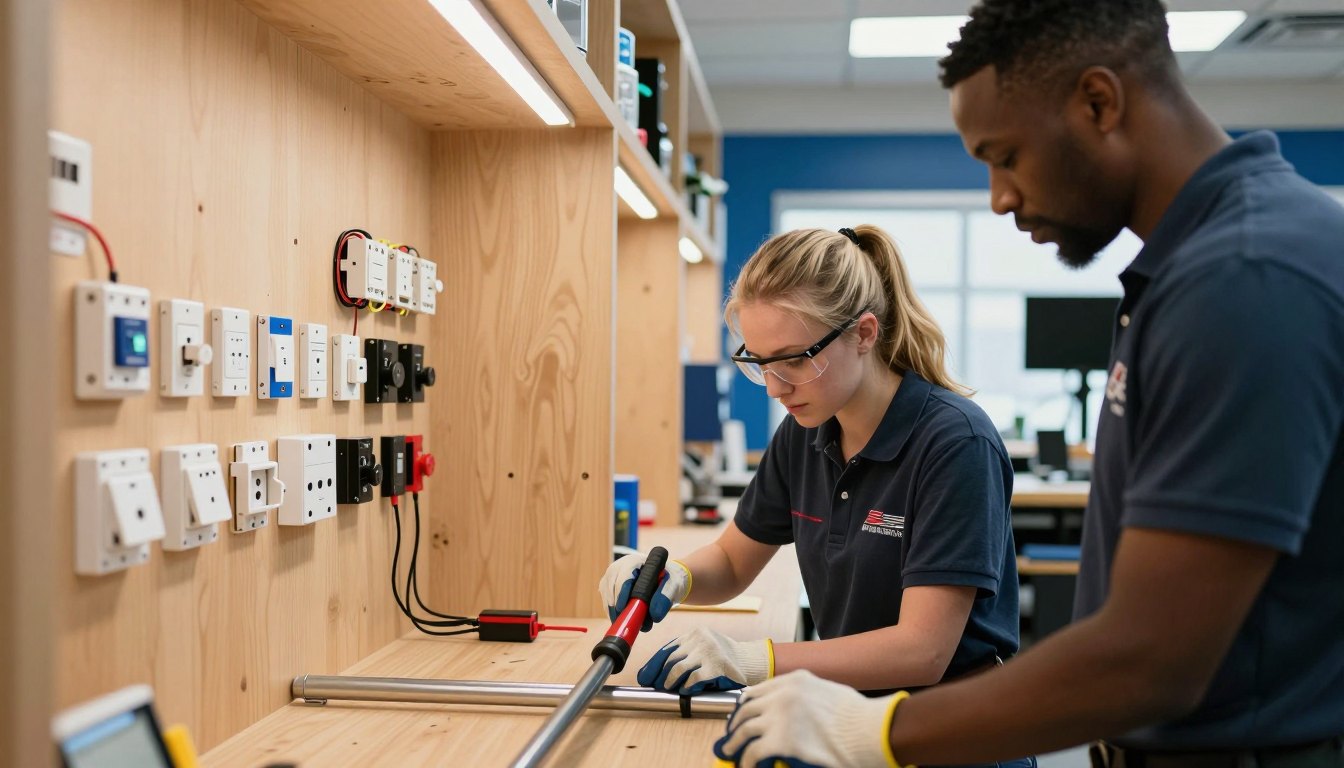
Level 1 introduces the electrical technician’s core skills in a workshop setting. Participants learn safety rules and electrical principles, then practice installing containment, cutting, bending, joining and threading conduit, connecting flexible cords to common apparatus and wiring one-way lighting circuits. Throughout the program each participant builds an electrical portfolio that documents completed tasks and forms the basis for progression to Level 2. Instructors emphasize neat, consistent workmanship, correct terminations and the habit of checking every circuit before it is handed over.
Learning Outcomes
- Apply occupational safety and electrical safety rules in a workshop and on site
- Explain basic electrical principles including voltage, current, resistance and power
- Select and use electrician’s hand tools correctly and safely
- Install cable containment systems and cut, bend, join and thread conduit to drawings
- Connect flexible cords to common apparatus with correct polarity and strain relief
- Install and test a one-way lighting circuit and record the work in an electrical portfolio
Program Modules
- Occupational Safety and Health — workshop and site safety, hazard awareness and PPE
- Electrical Safety Rules — safe isolation and test-before-touch for new electricians
- Electrical Principles and Wiring Regulations — Ohm’s law, circuits, power and wiring rule fundamentals
- Hand Tool Operations — selection, care and safe use of electrician’s tools
- Electrical Installation Containment — trunking, cable tray and conduit systems
- Cutting, Bending, Joining and Threading Conduit — conduit fabrication to set dimensions
- Installation Technology and Functional Skills — measurement, layout, reading drawings and workmanship
- Connecting Flexible Cords to Common Apparatus — plugs, fused connection units and appliance connections
- Installing One-Way Lighting Circuits — switching arrangements, wiring and functional testing
- Electrical Portfolio Building — recording evidence of practical competence
Who Should Attend
- New entrants and apprentices in the electrical trade
- General maintenance staff moving into electrical work
- Facility technicians needing formal electrical fundamentals
- Career changers preparing for electrician training
Standards & Codes Referenced
- NFPA 70 (National Electrical Code)
- NFPA 70E (Standard for Electrical Safety in the Workplace)
- IEC 60038 (IEC Standard Voltages)
- IEC 60364-5-56 (Low-Voltage Electrical Installations: Safety Services)
- IEC 60071 (Insulation Co-ordination)
Assessment & Certification
Candidates complete a written test on safety and electrical principles and a practical assessment in which they install containment and conduit and wire and test a one-way lighting circuit to the required standard of workmanship. Practical sessions take place at ASEEE-approved training centers.
Successful candidates are awarded the ASEEE competency certificate, issued with a unique certificate ID that employers and clients can verify online through Certificate Check. The certificate records the competencies demonstrated and supports continuing professional development records.