
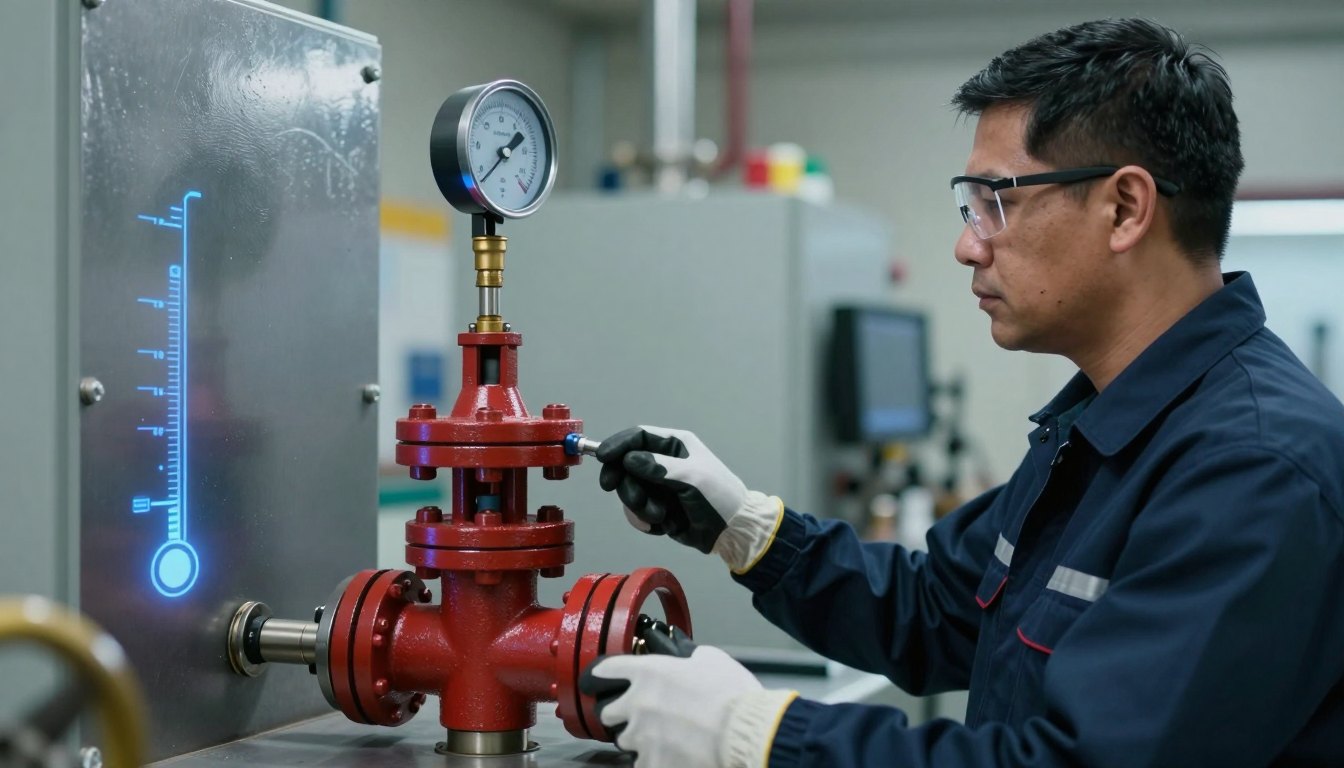
Program Overview
Valves are the final elements of almost every control and safety loop. A sticking control valve degrades product quality and energy efficiency. A relief valve that fails to lift can turn an upset into a catastrophe. Inspection of valve instrumentation therefore sits at the intersection of process control, mechanical integrity and functional safety.
This program trains inspectors to assess control valves, smart positioners and safety and relief valves against recognized codes. Participants review valve and actuator construction, positioner calibration and diagnostics, relief valve inspection under API 576 and set pressure and seat tightness testing under API 527, and pressure testing under API 598. Loop testing and troubleshooting tie the valve back to its control system, while IEC 61508 and IEC 61511 provide the context for valves used as final elements in safety instrumented functions.
Learning Outcomes
- Describe control valve, actuator and positioner construction and their failure modes
- Identify the codes and standards that apply to control and relief valve inspection and testing
- Calibrate and configure smart positioners and interpret their valve diagnostics
- Inspect and test pressure relief valves, including set pressure and seat tightness
- Perform loop tests from controller to valve and troubleshoot loop faults
- Assess valves used as final elements in safety instrumented functions
- Prepare inspection reports with clear findings and recommendations
Program Modules
- Introduction to Valve Instrumentation — valve types, actuators, accessories and their role in control and safety loops
- Applicable Codes and Standards — API 576, API 527, API 598, ANSI/ISA-75 and IEC 61508 and IEC 61511
- Control Valves and Smart Positioners — HART positioners, calibration, travel and signature diagnostics and common faults
- Safety and Relief Valves — inspection intervals, set pressure testing, seat leakage and in-service versus shop testing
- Loop Testing and Troubleshooting — signal checks, stroke testing, partial stroke testing and fault isolation
- Inspection Reporting — findings, defect grading, recommendations and records for mechanical integrity programs
Who Should Attend
- Instrumentation inspectors and technicians
- Valve workshop technicians
- Mechanical integrity and reliability engineers
- Process safety and functional safety engineers
- QA/QC personnel in oil, gas and petrochemical facilities
Standards & Codes Referenced
- API 576
- API 527
- API 598
- ANSI/ISA-75 series
- IEC 61508
- IEC 61511
Assessment & Certification
Assessment combines a written examination on valve instrumentation, inspection codes and loop troubleshooting with a practical assessment in which each participant calibrates a smart positioner, performs a relief valve set pressure test and prepares an inspection report. Practical sessions take place at ASEEE-approved training centers, using calibrated equipment and realistic work scenarios under the supervision of a qualified assessor.
Participants who meet the competency criteria receive an ASEEE competency certificate carrying a unique certificate ID that employers and clients can verify online through Certificate Check. ASEEE recommends recertification every 3 years to keep skills aligned with current practice and revised standards.