Program Overview
At 132 kV the electric stress inside a cable accessory is many times higher than in distribution systems, and tolerances that are acceptable at 11 kV become critical. Insulation surfaces must be prepared to a fine finish, dimensions held to the millimeter and contamination eliminated entirely. The jointers who do this work carry responsibility for transmission circuits that may supply entire districts.
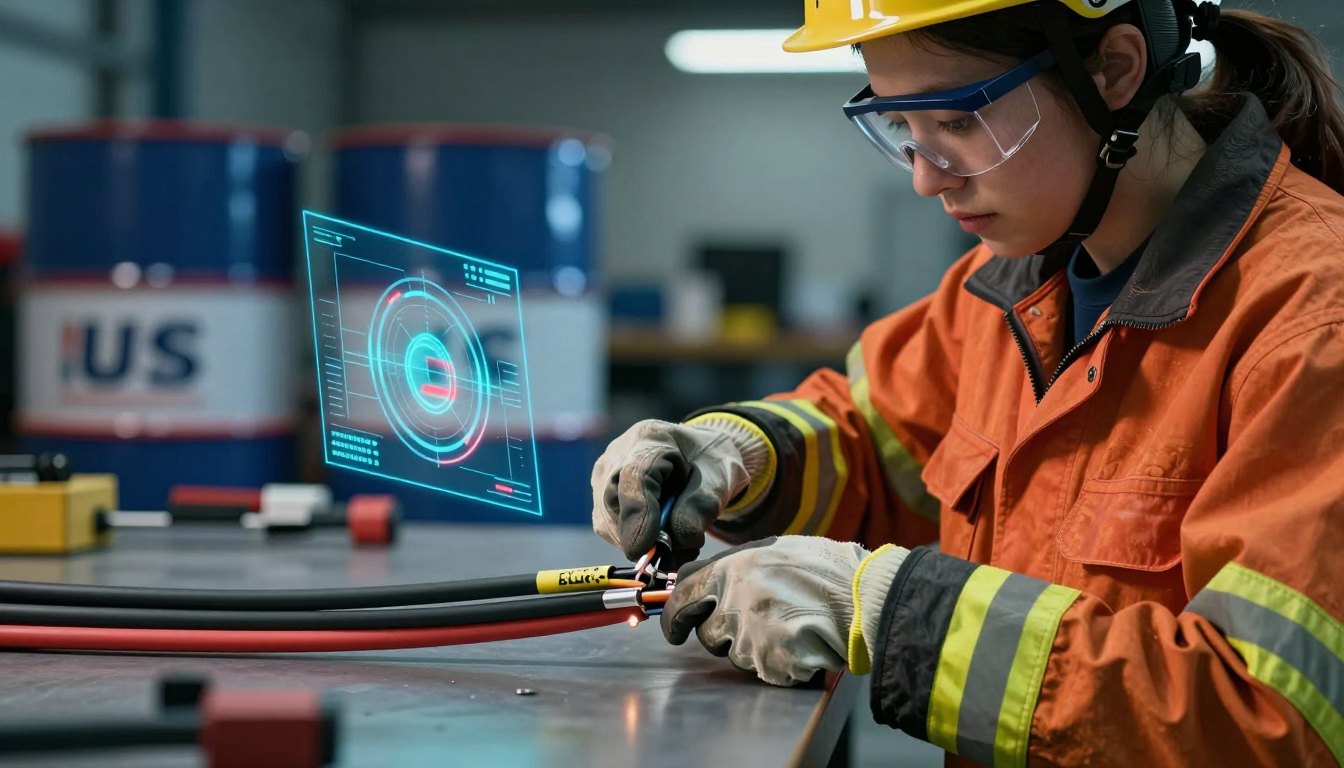
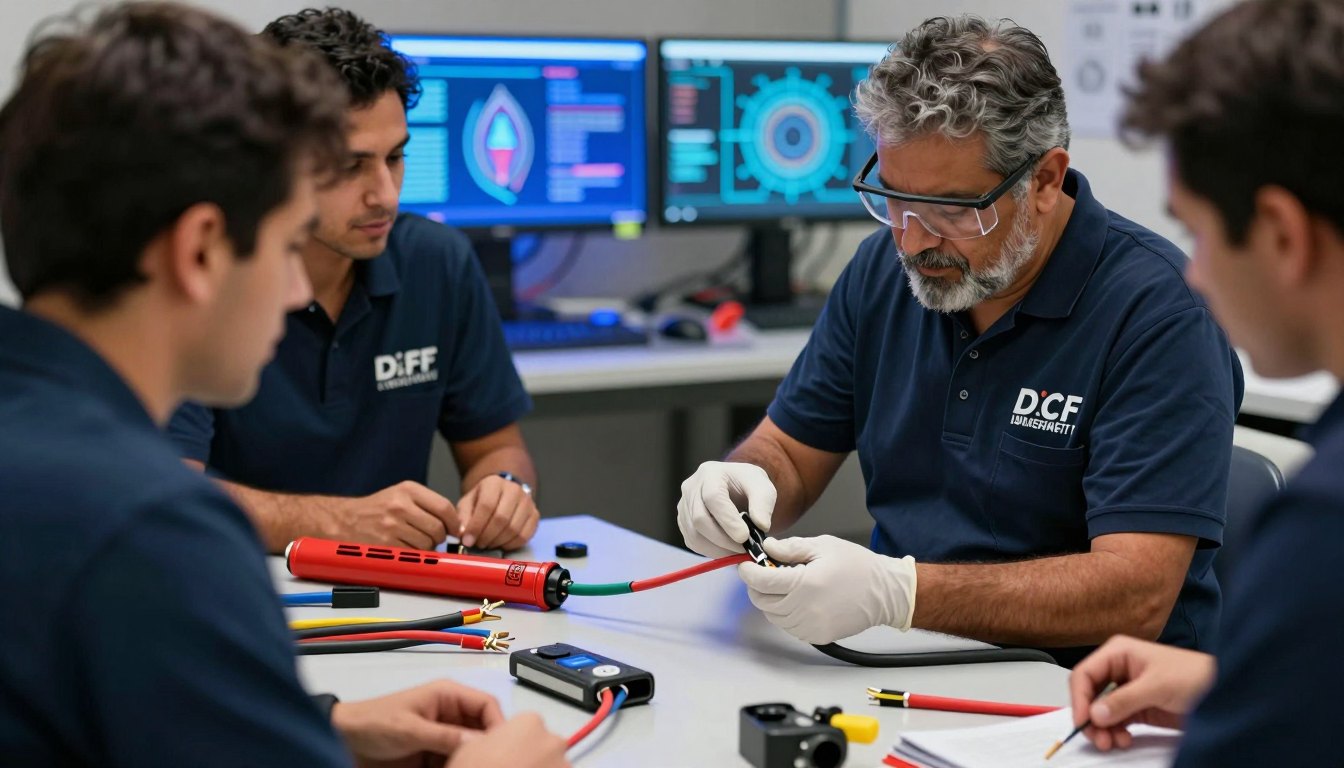
This program is designed for experienced MV jointers stepping up to transmission voltage. It covers the construction of 132 kV XLPE cables with metallic sheaths, the design of cold shrink joint bodies and terminations, shear-bolt and crimp connector systems for compacted and segmental conductors, and reinstatement of screens and jackets. Practical sessions reproduce real jointing bay conditions, and a dedicated module examines failed terminations to show how preparation errors lead to breakdown.
Learning Outcomes
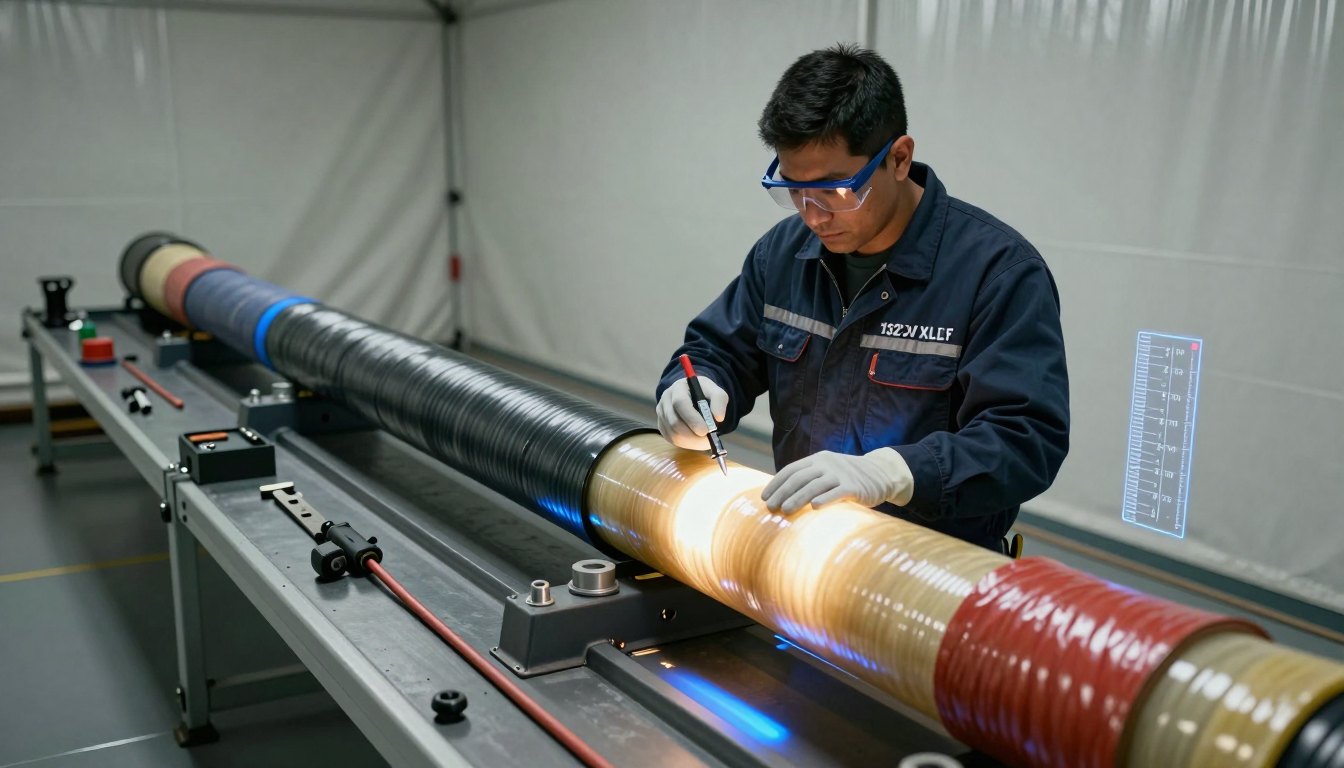
- Describe the construction of 132 kV XLPE cables, including segmental conductors, semiconductive screens and metallic sheaths
- Prepare 132 kV cable insulation to the dimensional and surface finish requirements of the accessory manufacturer
- Install shear-bolt or crimp connectors suited to round compacted and round segmental conductors
- Assemble cold shrink joint bodies and terminations with correct stress control positioning
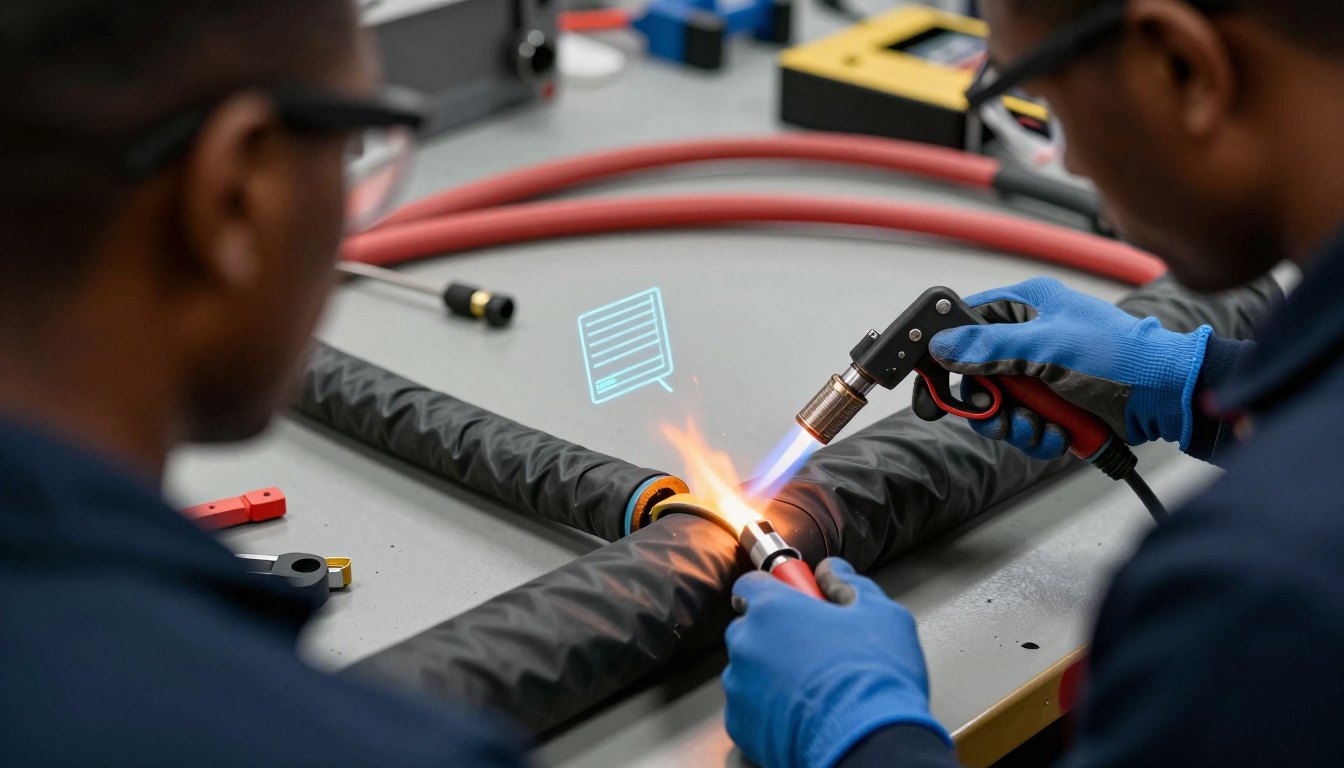
- Reinstate screen continuity and re-jacket joints using cold shrink, heat shrink or resin-filled metal housings
- Explain post-installation testing of EHV cables and analyze causes of termination failures
Program Modules
- Occupational Safety and Health and Electrical Safety Rules — permits, isolation, earthing and working in jointing bays
- Cable Constructions and Mechanical Protection — 132 kV cable design and protection of joints and terminations
- Cold Shrink 132 kV Cable Joints and Splice Body — joint body design, stress control and installation sequence
- Jointing Tools — insulation shavers, heating and straightening equipment, abrasives and measuring tools
- Shear-Bolt and Crimp Connectors — connector selection, torque control and crimp verification
- Connectors for Compacted and Segmental Conductors — conductor preparation and connector compatibility
- Shielding and Re-Jacketing Systems — screen wire and sheath continuity, bonding leads and moisture barriers
- Re-Jacketing Methods — cold shrink, heat shrink and resin-filled metal housing enclosures
- Testing of HV Cable Insulation and Cable Faults — sheath tests, insulation testing after installation and fault location principles
- Practical: HV Cable Jointing and Installation — full preparation and installation of a 132 kV joint
- Practical: 132 kV Termination Failure Analysis — examining failed terminations and identifying root causes
Who Should Attend
- Experienced MV cable jointers progressing to transmission voltage
- Transmission utility cable technicians
- Cable installation supervisors on EHV projects
- Commissioning and test engineers for underground transmission circuits
Standards & Codes Referenced
- IEC 60840 (Power Cables with Extruded Insulation, Rated Voltages above 30 kV up to 150 kV)
- IEEE Std 404 (Cable Joints for Extruded and Laminated Dielectric Shielded Cables)
- IEC 60684 (Flexible Insulating Sleeving)
- AS/NZS 1026 (Impregnated Paper Insulated Electric Cables)
- AS/NZS 1125 (Conductors in Insulated Electric Cables)
- AS/NZS 1429.1 (Polymeric Insulated Cables, 1.9/3.3 kV to 19/33 kV)
- AS/NZS 1660 (Test Methods for Electric Cables)
Assessment & Certification
Candidates complete a written examination on EHV cable design, stress control and testing, followed by a practical assessment in which they prepare a 132 kV cable and install a joint or termination under observation against the accessory manufacturer’s instructions. Practical sessions take place at ASEEE-approved training centers.
Successful candidates are awarded the ASEEE competency certificate, issued with a unique certificate ID that employers and clients can verify online through Certificate Check. ASEEE recommends recertification every 2 years to keep competence aligned with current standards, equipment and site practice.