Program Overview
A cable locator is only as reliable as the person interpreting it. The Leica Detect DD130 offers power, radio, auto and transmitter-based detection, but each mode responds differently to soil conditions, nearby conductors and signal coupling. Operators who understand these behaviors find services that others miss and avoid trusting readings that should be questioned.
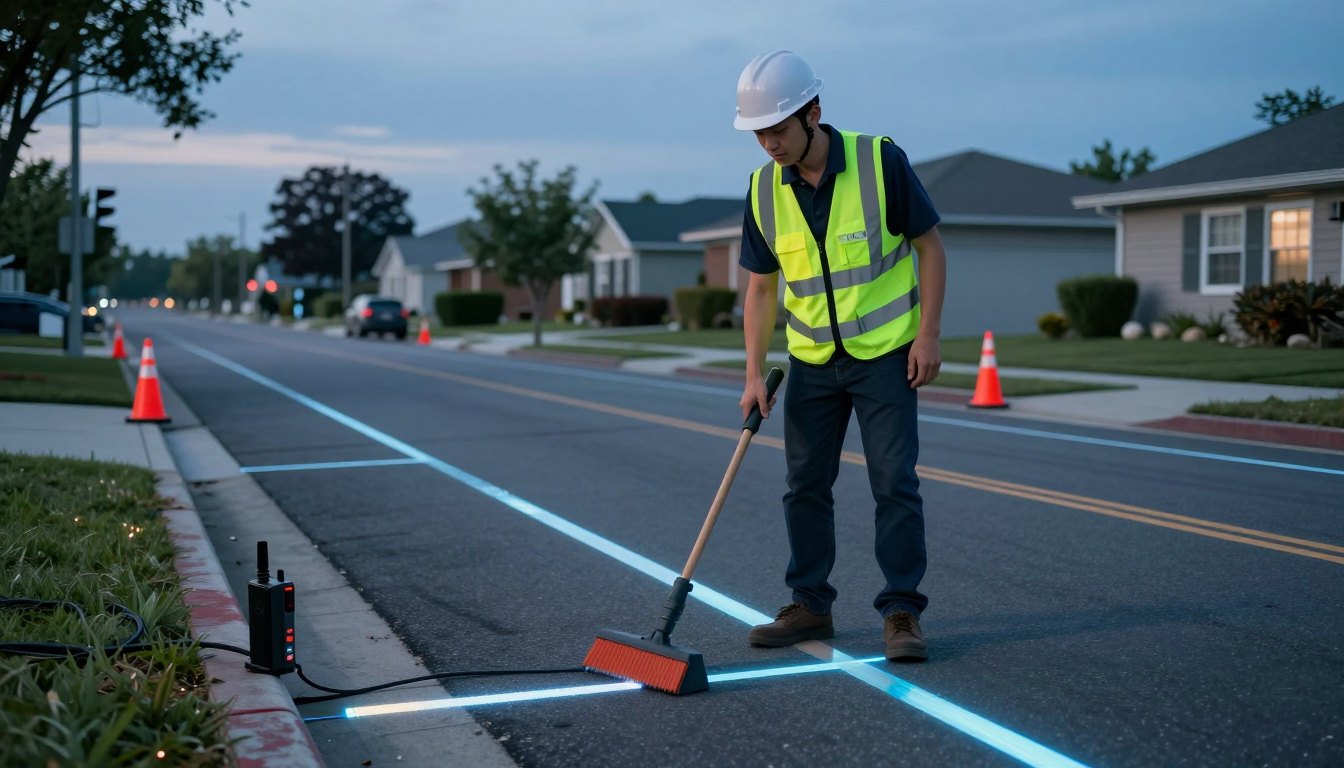
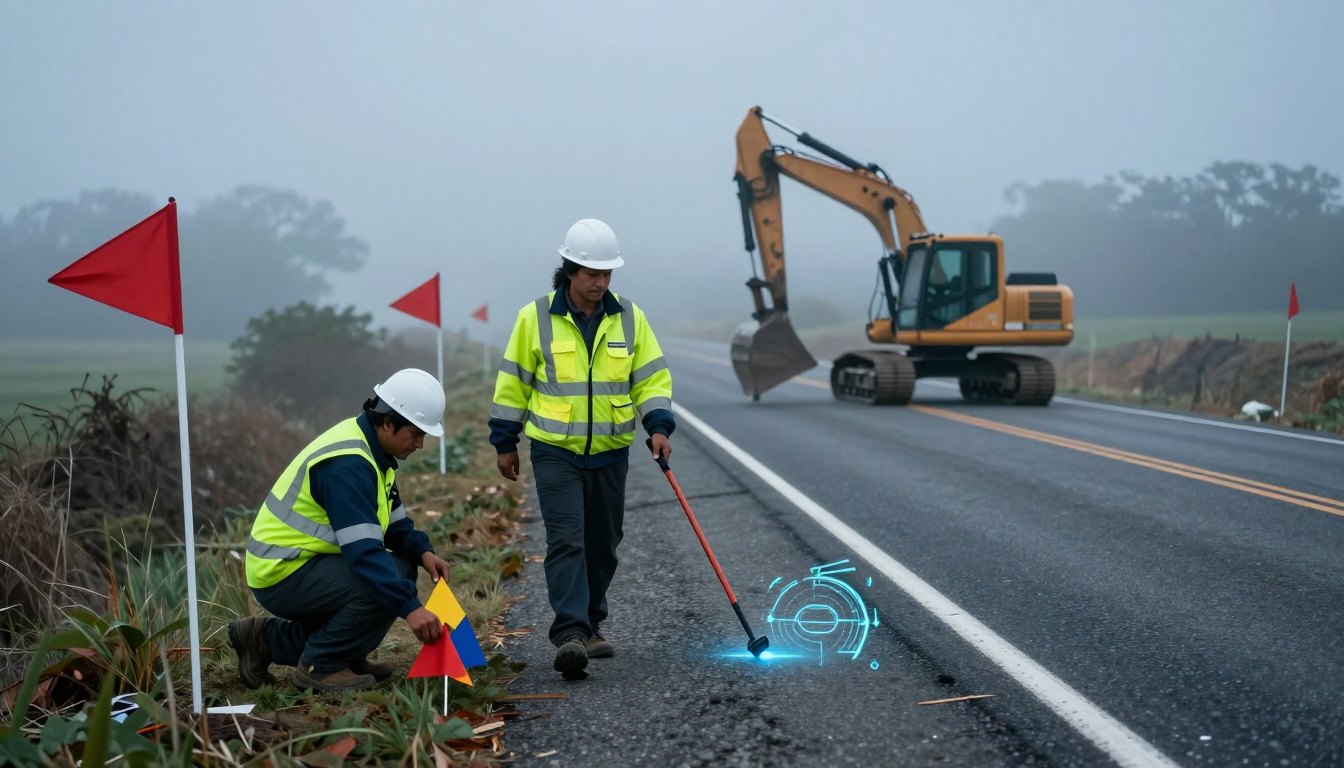
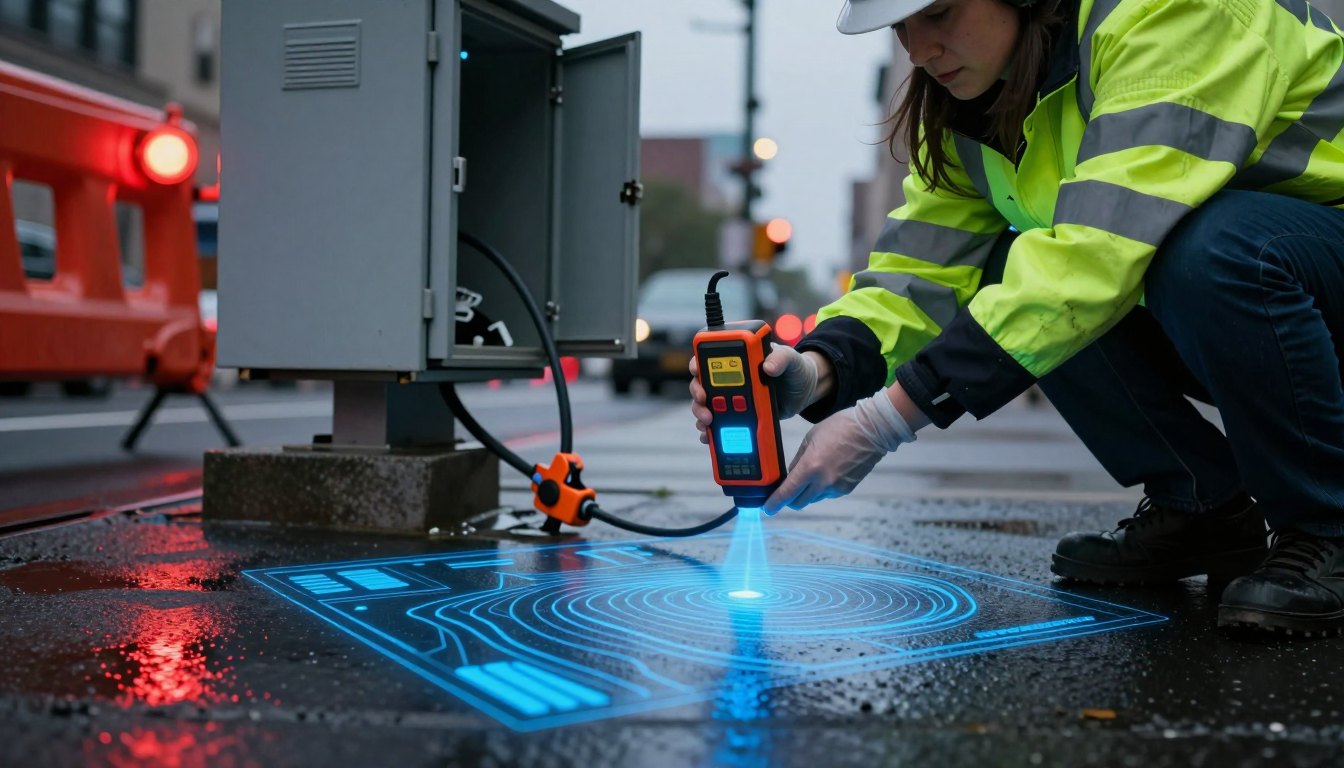
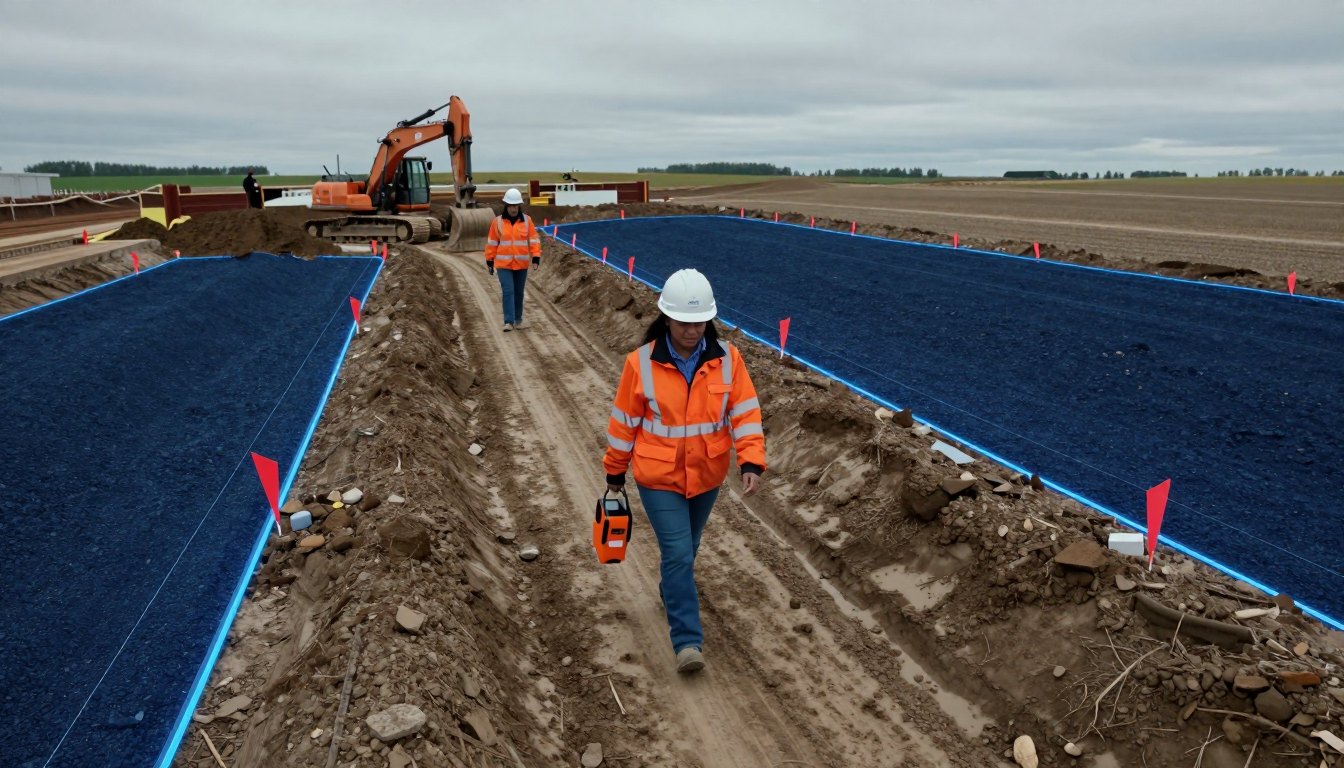
This program builds that understanding through theory and extensive field practice. Participants learn electromagnetic detection principles, the DD130 operating modes and controls, and how to apply signal generation and induction techniques to trace specific services. Particular attention goes to depth estimation accuracy, common error sources and the procedural controls of HSG47 and OSHA 2226-10R, so that locating results translate into safe excavation decisions on site. Every exercise ends with the same discipline: mark what was found, record what could not be confirmed, and communicate both clearly to the excavation crew.
Learning Outcomes
- Interpret utility plans, survey drawings and buried service symbols
- Explain the electromagnetic principles that underpin passive and active detection
- Operate the DD130 in power, radio, auto and transmitter modes and select the right mode for the task
- Apply signal generation and induction techniques to locate and trace specific cables and pipes
- Estimate depth and judge its accuracy under different site conditions
- Carry out pre-use inspection and calibration checks and follow a safe locating procedure
- Recognize the limitations of the technology and the most common sources of locating error
Program Modules
- Utility Plans and Survey Drawings — reading service records, survey drawings and buried service symbols before going to site
- Fundamentals of Electromagnetic Detection — signal sources, field shapes and how buried conductors re-radiate energy
- Operating Modes of the Leica Detect DD130 — power, radio, auto and transmitter modes, controls and indicators
- Pre-Use Inspection, Calibration Checks and Safe Work Procedures — daily checks, battery and function tests, and a safe locating sequence
- Signal Generation and Induction Techniques — using the signal transmitter for induction and direct connection
- Locating and Tracing Underground Services — sweep patterns, tracing routes and resolving congested service corridors
- Depth Estimation and Accuracy Limitations — how depth is derived and when it is unreliable
- Limitations and Common Error Sources — distortion, adjacent-line coupling, non-conductive pipes and operator errors
Who Should Attend
- Excavation and groundwork operatives
- Utility and telecom field technicians
- Site supervisors responsible for permits to dig
- Surveying and subsurface utility mapping staff
Standards & Codes Referenced
- HSG47
- OSHA 2226-10R
- PAS 128:2014
- ASCE 38-22
Assessment & Certification
Assessment combines a written examination on electromagnetic detection principles, DD130 operation and safe excavation practice with a practical assessment in which each participant locates, traces and marks a set of buried services with the DD130 and signal transmitter and records depth estimates with stated confidence. Practical sessions take place at ASEEE-approved training centers, using calibrated equipment and realistic work scenarios under the supervision of a qualified assessor.
Participants who meet the competency criteria receive an ASEEE competency certificate carrying a unique certificate ID that employers and clients can verify online through Certificate Check. ASEEE recommends recertification every 3 years to keep skills aligned with current practice and revised standards.