Program Overview
Commercial and industrial installations raise the bar over domestic work. Circuits are larger, containment systems are more varied, lighting must meet design criteria, and the electrician is expected to prove the installation safe through inspection and testing before it is energized.
Level 2 builds on the Level 1 foundation to develop a qualified electrician for commercial and industrial sectors. Participants deepen their electrical science, install wiring systems and enclosures, and plan and install lighting schemes. A substantial part of the program is dedicated to inspection, testing, fault finding and maintenance, so that participants can verify their own work and diagnose faults in existing installations.
Learning Outcomes
- Apply electrical safety rules and safe isolation procedures to commercial and industrial work
- Use electrical science to calculate circuit loads, voltage drop and cable sizing
- Install wiring systems, enclosures and containment to drawings and specifications
- Design and install lighting circuits meeting stated illumination requirements
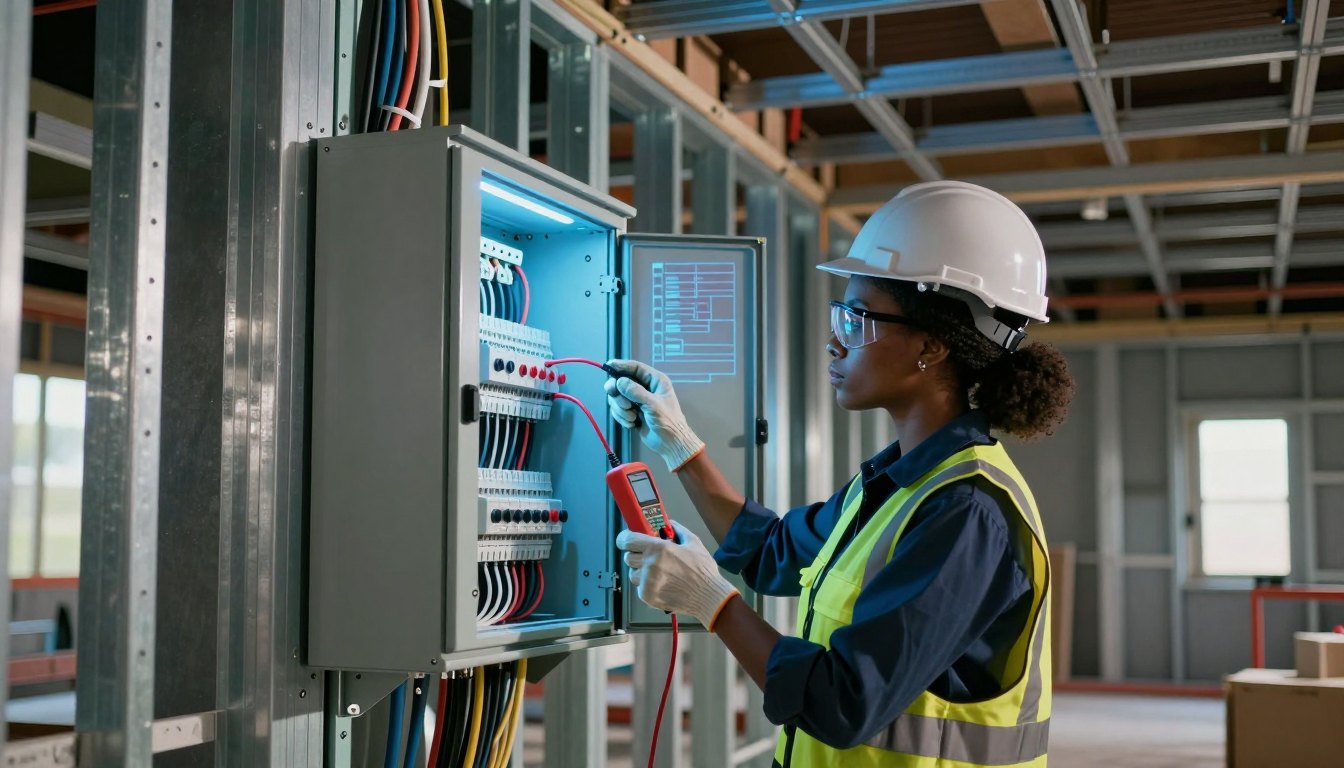
- Inspect and test installations, including continuity, insulation resistance, polarity and earth fault loop impedance
- Diagnose faults in installed circuits and carry out corrective maintenance
Program Modules
- Occupational Safety, Health and Electrical Safety Rules — safe systems of work for commercial and industrial sites
- Principles of Electrical Science — AC theory, power, cable sizing and voltage drop
- Electrical Installation Containment — tray, ladder, trunking and conduit systems
- Electrical Installation Technology — distribution, protective devices and earthing arrangements
- Installation of Wiring Systems and Enclosures — cable selection, routing, glanding and termination
- Lighting Installation and Design — lighting layouts, control circuits and installation
- Installation Technology and Functional Skills — planning, drawings and quality of workmanship
- Connecting Flexible Cords to Common Apparatus — industrial equipment connections and strain relief
- Cutting, Bending, Joining and Threading Conduit — advanced conduit work including offsets and saddles
- Inspection, Testing, Fault Finding and Maintenance — test sequences, certification records and fault diagnosis
- Electrical Portfolio Building — evidence of competence for qualified electrician status
Who Should Attend
- Electricians who have completed Electrical Installations Level 1
- Apprentice electricians in commercial and industrial sectors
- Maintenance electricians seeking formal qualification
- Electrical contractors developing site teams
Standards & Codes Referenced
- NFPA 70 (National Electrical Code)
- NFPA 70E (Standard for Electrical Safety in the Workplace)
- IEC 60038 (IEC Standard Voltages)
- IEC 60364-5-56 (Low-Voltage Electrical Installations: Safety Services)
- IEC 60071 (Insulation Co-ordination)
Assessment & Certification
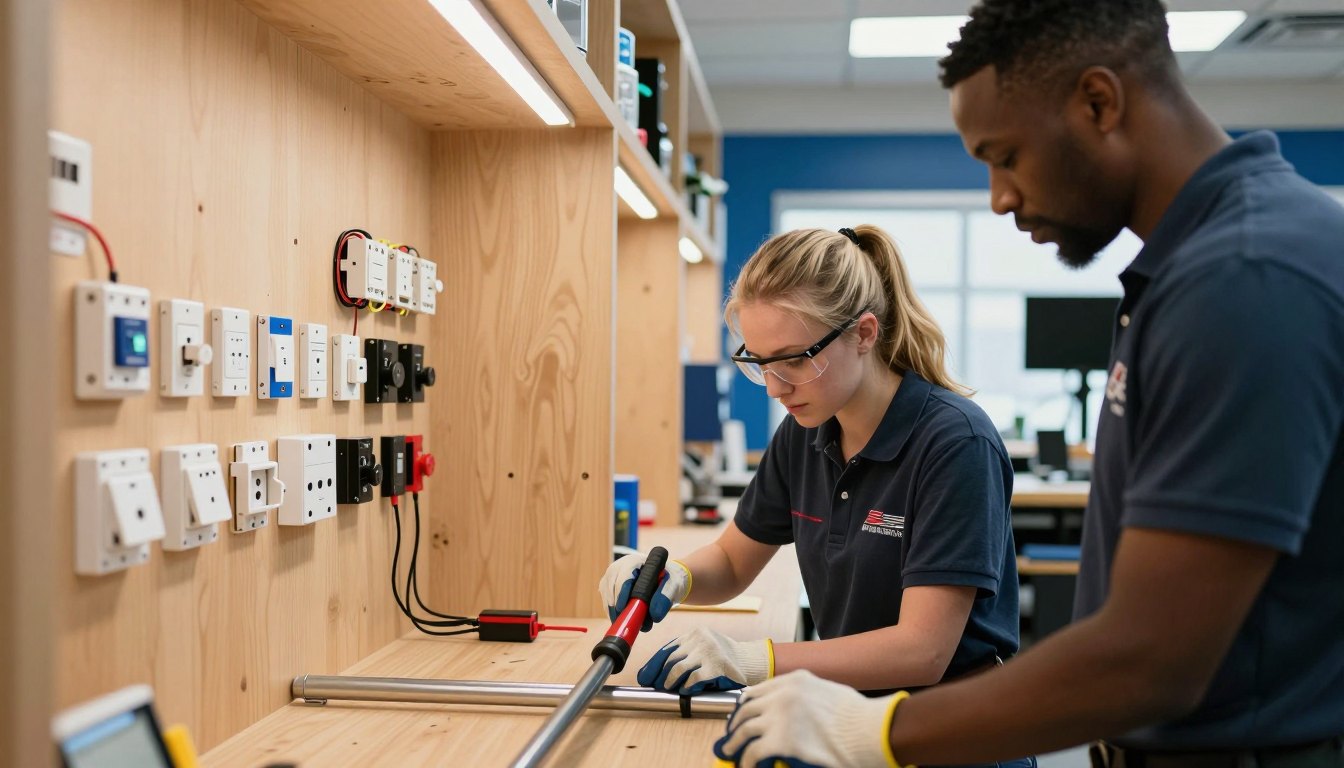
Assessment includes a written examination on electrical science, installation practice and testing, and a practical assessment in which candidates install a circuit, complete a full inspection and test sequence, and locate faults introduced into a test rig. Practical sessions take place at ASEEE-approved training centers.
Successful candidates are awarded the ASEEE competency certificate, issued with a unique certificate ID that employers and clients can verify online through Certificate Check. The certificate records the competencies demonstrated and supports continuing professional development records.