Program Overview
When electricity injures someone, the first minutes decide the outcome, and the first risk is to the rescuer. This program prepares electrical workers and their colleagues to respond to electrical incidents safely and effectively, from isolating the source to keeping a casualty alive until emergency services take over.
Grounded in the physiology of electric shock described in IEC 60479, the program covers why current causes cardiac arrest, deep tissue damage and secondary trauma. Participants then practice core first aid skills: scene assessment, airway management and CPR, AED use, recovery positions, choking, shock, bleeding control and the specific care of electrical and arc flash burns. Record keeping, barrier use and OSHA first aid requirements complete the program. Scenarios reflect real workplaces: a technician in contact with a live conductor, a casualty at height after a shock, and arc flash burns in a switchroom. Each scenario reinforces the rule that the rescuer must never become the second victim.
Learning Outcomes
- Assess an electrical incident scene and make it safe before approaching a casualty
- Explain the effects of electric current on the human body, including ventricular fibrillation
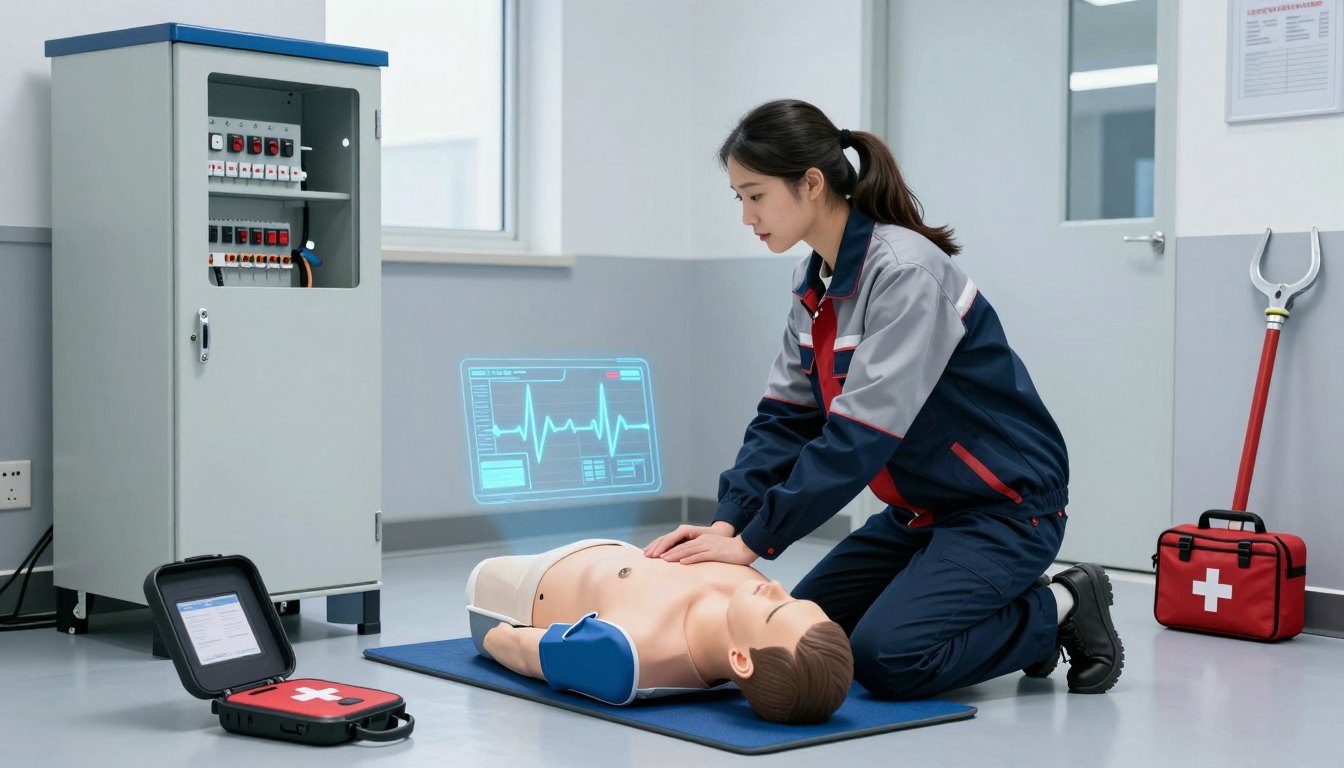
- Perform CPR and use an AED on an adult casualty
- Manage unconsciousness, choking, shock and severe bleeding
- Provide first aid for electrical and arc flash burns
- Record incidents and use barrier devices to protect against bloodborne pathogens
Program Modules
- Principles of First Aid — priorities, consent, scene safety and calling for help
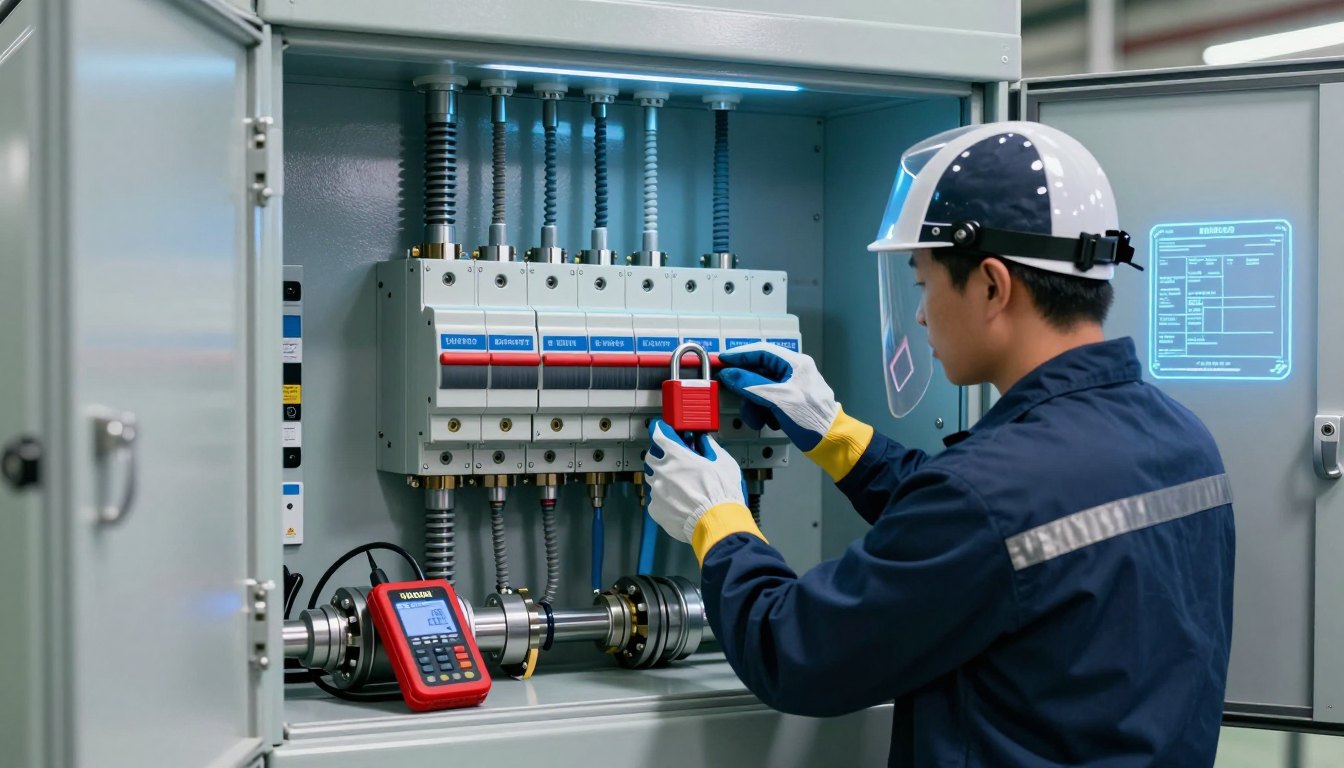
- Managing an Electrical Incident — isolation, safe separation of the casualty and secondary hazards
- Airway Disorders and Resuscitation — airway management, CPR and AED use
- Unconsciousness and Recovery Positions — assessment, monitoring and positioning
- Choking, Shock and Electrical Burns — back blows and abdominal thrusts, shock management and burn cooling
- Bleeding Control and Bandaging — direct pressure, dressings and tourniquet awareness
- Record Keeping and Use of Barriers — incident reports, first aid kits and personal protective barriers
Who Should Attend
- Electricians and electrical technicians
- Workers operating near energized equipment
- Electrical safety watches and standby persons
- Supervisors and site safety officers
- Designated workplace first aiders
Standards & Codes Referenced
- NFPA 70E (Standard for Electrical Safety in the Workplace)
- OSHA 29 CFR 1910.151 (Medical Services and First Aid)
- ANSI/ISEA Z308.1 (Minimum Requirements for Workplace First Aid Kits and Supplies)
- IEC 60479 / IEC TS 60479-1 (Effects of current on human beings and livestock)
- ISO 45001 (Occupational health and safety management systems)
Assessment & Certification
Competence is confirmed through a written examination on first aid principles and electrical injury physiology and a practical assessment on CPR and AED manikins and scenario-based electrical incident drills. Practical sessions take place at ASEEE-approved training centers under the supervision of a qualified assessor. Assessors observe scene safety decisions as closely as the first aid techniques themselves.
Successful candidates receive the ASEEE competency certificate, which carries a unique ID that employers and clients can verify online through Certificate Check. Because CPR skills decline quickly, annual refresher training is recommended, with recertification at least every 2 years.